
Identify the plant before trying to remove clover from a lawn. Whether to control it depends on your turf goals and the size of the patch.
Choose a response that fits the lawn rather than promising permanent prevention. We will discuss about DNR Landscaping‘s Professional services and natural remedies, selective herbicides, and important grass maintenance techniques that prevent the reappearance of clover, in this guide.
Understanding Clover and Why It Invades Lawns
White clover is a legume that can obtain nitrogen through its association with root bacteria. Although perennial in many regions, it often behaves as an annual in Florida. Its presence does not by itself diagnose low nitrogen or poor maintenance. Inspect the turf and confirm any underlying problem.
How to Kill Clover in Lawn: Approaches That Work
Options include leaving acceptable clover, hand removal, or a suitable labeled herbicide. A natural description does not establish safety for children, pets, grass, or the environment.
How to Naturally Kill Clover in Lawn
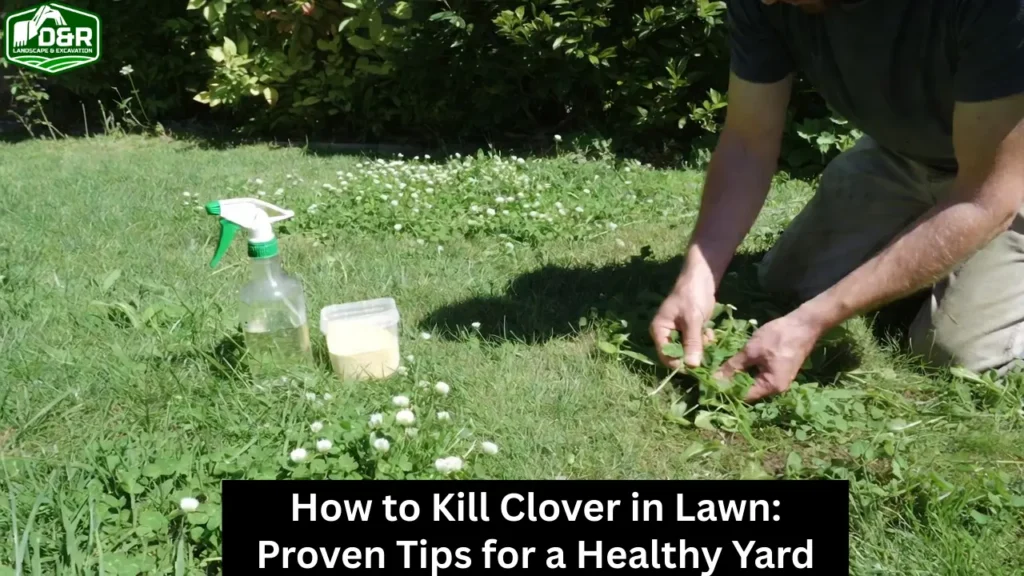
Hand removal avoids spraying, but extensive patches may take considerable work.
Manual Removal
Remove as much of the rooted plant and creeping growth as practical. Recheck for regrowth.
Improve Soil Nitrogen Levels
Fertilize according to the turf’s actual needs and local restrictions. Extra nitrogen is not a clover-killing treatment.
Vinegar Spot Treatment
Do not rely on a vinegar-and-soap mixture as a safe lawn treatment. It can injure the grass and may leave surviving plant parts.
Corn Gluten Meal
Corn gluten products are not a cure for established clover. Routine applications are not a dependable way to prevent clover.
Mowing Practices to Suppress Clover
Use the mowing height recommended for the grass, avoiding scalping.
How to Kill Clover in Lawns Using Herbicides
A suitable selective herbicide may control clover, but safety for one turf species does not imply safety for another. Choose a product labeled for both the plant and your grass. Follow temperature, drought, application, and other restrictions. Wear the specified protective equipment and observe access restrictions for people and pets.
Lawn Maintenance Practices That Prevent Clover
Removing clover does not guarantee it will stay absent. Monitor the lawn and address confirmed maintenance problems.
Soil Testing
Use soil testing and turf recommendations to guide nutrients and pH. Do not fertilize solely because clover is present.
Overseeding Thin Areas
Repair thin areas with a suitable grass and planting method. Some Florida lawns require sod or plugs rather than seed.
Aeration
Aeration of your lawn may help confirmed compaction at a suitable time. It is not an automatic clover treatment.
Proper Watering
Water according to established turf needs and current restrictions. Do not assume changing irrigation alone will remove clover.
Natural vs Chemical Methods: Finding the Right Balance
Choose a response based on the patch, turf, and exposure considerations. Homemade mixtures are not automatically safer. Reassess after treatment before repeating it. Follow the label if another application is permitted and needed.
Conclusion: The Secret to a Clover-Free Lawn
Appropriate lawn care supports turf without promising a clover-free surface.
Monitor regrowth and repair thin turf where needed. Acceptable clover can remain if that fits the site and your goals.