
Vinegar can injure lawn grass as well as weeds. Its natural origin does not make it a selective or harmless lawn treatment.
Choose the treatment for the identified weed or disease and the particular grass. That’s why people use professionals help in this matter, and at DNR Landscaping they provide every possible care to you lawn.
What Is Vinegar and How Does It Affect Plants?
Acetic acid is the active ingredient. Household vinegar is commonly about five percent acetic acid; horticultural products can be much stronger and more hazardous. On exposed plant tissue, acetic acid can cause:
- Destruction of plant cell membranes.
- Drying up leaf tissue.
- Rapidly drying and browning.
It acts by contact and is nonselective. Desirable plants can be injured where the spray reaches them.
Will Vinegar Kill Lawn Grass?
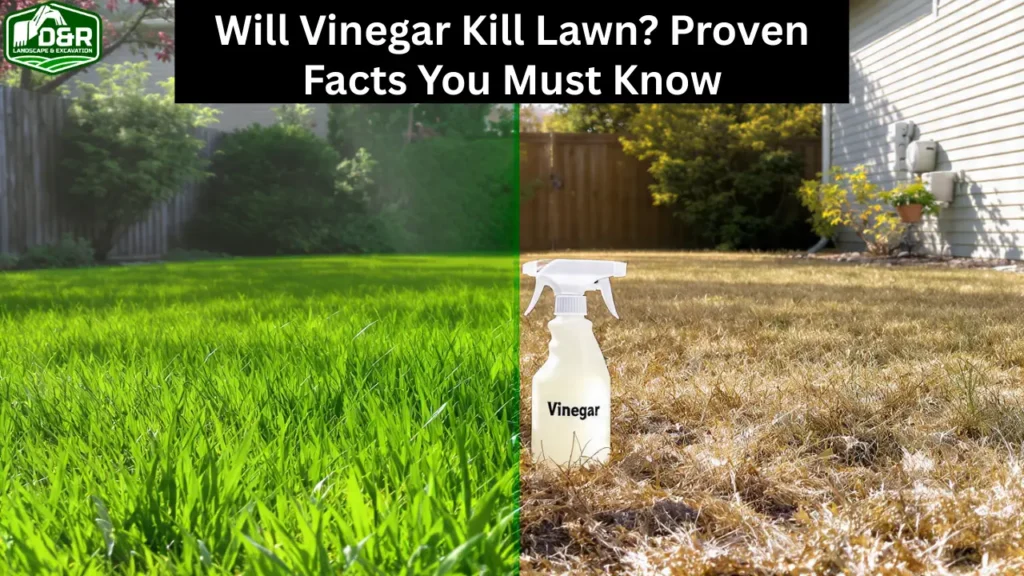
Yes, exposed grass can be burned or killed, depending on the concentration and application. Acetic acid damages foliage tissue; it does not “evaporate” the leaf. Visible browning does not tell you whether the plant’s growing points survived.
Surface Damage vs Root Damage
Contact injury mainly affects treated tissue. Do not assume stronger vinegar travels through soil to reliably kill deep roots. Repeated exposure can cause further injury, but is not a reliable lawn renovation method. Whether grass recovers depends on the damage and surviving growing tissue.
Will Vinegar Kill My Lawn if I Spray It?
An accidental spray can damage nearby grass. Assess the actual exposure rather than assuming the whole lawn will die. Recovery time varies. A one-to-two-week deadline is not dependable.
What Happens After Accidental Application?
Browning may develop quickly, but appearance alone does not establish permanent death. After a spill, follow the product’s exposure and cleanup instructions. Avoid indiscriminate flooding that could spread material or create runoff.
Why Vinegar Is Non-Selective and Risky for Lawns
Selective herbicides also have limits. A product safe for one grass can damage another, especially under unsuitable conditions. Broad application can:
- It destroys both the weeds and the desirable turfgrass.
- It may cause uneven results
- It may cause poor health of the lawn in general.
Natural origin does not remove plant injury or handling risks. Concentrated acetic acid can cause serious eye and skin injury.
Will Vinegar Kill Lawn Fungus?
Vinegar is not a dependable treatment for turf disease.
Identify lawn fungal problems before choosing treatment. Mushrooms and diseases damaging grass are different issues.
Surface Suppression vs Long-Term Control
Surface injury does not establish control of an underlying pathogen. A concentrated spray can further injure turf around the affected patch. Have recurring disease symptoms diagnosed and correct relevant maintenance conditions. Use a labeled fungicide only when appropriate. Do not treat vinegar as a lasting disease cure.
The Real-World Pros and Limitations of Vinegar on Lawns
Some labeled acetic-acid products control small weeds in specified sites. This does not make household mixtures a safe substitute. Perennial weeds may regrow after contact injury. Nearby desirable plants remain vulnerable. A suitable lawn treatment should control the identified problem without relying on uncontrolled contact damage.
When Should Vinegar Be Used in Yard Care?
None of these locations is automatically safe for vinegar:
- Hardscape Cafe: Sidewalks and patios.
- Single weeds distant the lawn grass.
- Regions that are being cleared on purpose to be refurbished.
Use only a labeled product in a permitted site, following its application method and protective precautions. A brush does not override the label. Do not broadcast vinegar over a lawn you intend to keep.
Better Alternatives for Lawn Weed and Fungus Control
Begin with identification, then select a compatible response.
Controlling Weeds Safely
If needed, choose a herbicide labeled for both the weed and turf. Appropriate maintenance helps density but does not guarantee weed exclusion.
Managing Lawn Fungus Effectively
Disease management depends on the diagnosis. Drainage, irrigation, mowing, and fertilizer may need adjustment; aeration and fungicide are not universal answers. Correct the confirmed cause rather than treating discoloration blindly.
Final Answer: Will Vinegar Kill Lawn?
Vinegar can damage grass. The amount of permanent injury varies, so neither inevitable death nor guaranteed recovery should be promised. For weeds or disease in a lawn, use identification and grass-specific guidance. Vinegar’s availability does not make it a suitable substitute.