
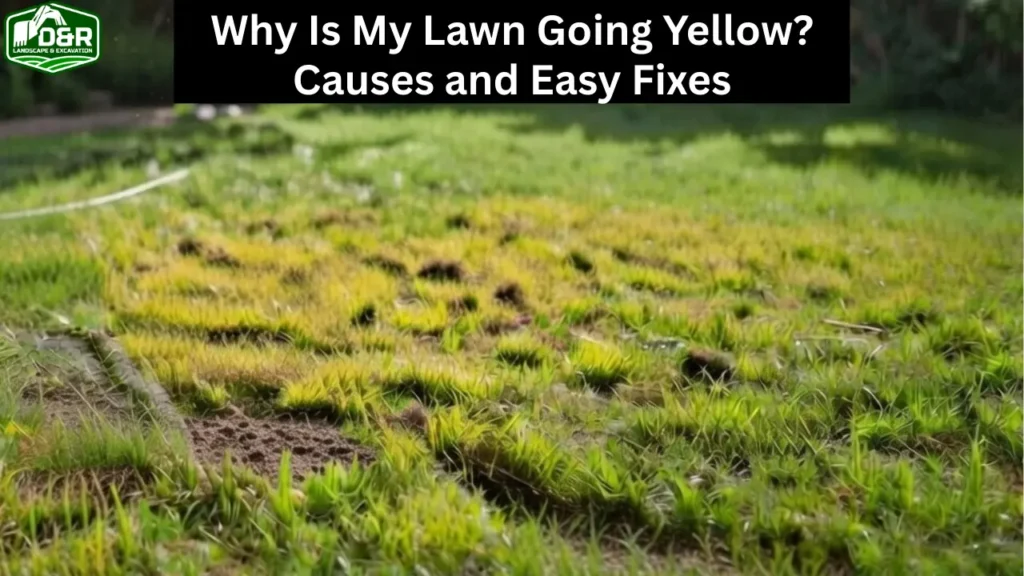
A yellow lawn is a symptom, not a diagnosis. The cause may be too much or too little water, an irrigation problem, nutrient stress, compacted or waterlogged soil, mowing damage, shade, insects, disease, or normal seasonal slowdown. The pattern of the yellowing usually gives you the best place to start.
Before you add fertilizer or spray anything, look at where the yellow grass appears, how quickly it developed, and what changed beforehand. The mistake to avoid is treating the color before you understand the pattern. If the problem is spreading or you need help evaluating a lawn in Fort Pierce, Port St. Lucie, Vero Beach, or a nearby area, call D&R Landscaping & Excavation at (772) 370-9457 or send the property details through our contact form.
Start with the pattern of the yellowing
Take a few minutes to walk the property before deciding on a treatment. Broad, uniform yellowing points toward a different problem than a single stripe, a soggy low spot, scattered patches, or damage along a driveway. That quick walk often tells you more than the color alone.
- Yellowing across most of the lawn: consider irrigation coverage, nutrient stress, mowing height, seasonal slowdown, or a problem affecting the entire root zone.
- Round or expanding patches: compare drainage, moisture, insects, disease symptoms, pet activity, and recent product applications.
- Yellow strips or straight lines: inspect sprinkler coverage, fertilizer or chemical application patterns, mower damage, and vehicle or foot traffic.
- Yellow low areas: check whether water remains after rain or irrigation.
- Yellow grass beside pavement: consider heat, reflected sunlight, compacted soil, salt, or runoff.
Different problems can look surprisingly similar, and this is where guesswork gets expensive. UF/IFAS notes that correct diagnosis matters because disease, irrigation, fertility, and soil problems require different responses. Its Florida turfgrass disease guidance is a useful reference when symptoms are difficult to separate.
Common reasons a Florida lawn turns yellow
Too much water, too little water, or uneven irrigation
Dry grass may fade, curl, or stop growing, but overwatered grass can also yellow because saturated soil limits oxygen around the roots. Look for sprinkler heads that are blocked, misdirected, or creating runoff. Compare the soil in a yellow area with healthy turf instead of assuming the entire lawn needs more water.
Persistent soggy spots suggest a drainage, grading, or irrigation problem rather than a need for another treatment. Watering more can make those areas worse.
Nutrient stress or soil-pH problems
Nitrogen, iron, and other nutrient problems can affect lawn color, but yellow grass does not automatically mean “add fertilizer.” Nutrients may already be present but unavailable because of root damage, excess water, high soil pH, or another condition. Applying the wrong product can waste money, burn turf, or feed a disease problem.
If the cause is unclear, use a soil test and species-appropriate guidance before changing the program. Our article on when to fertilize a lawn explains why timing and lawn condition matter.
Compaction and poor drainage
Compacted soil restricts air, water movement, and root growth. The lawn may thin or yellow even when the surface is being watered. Heavy traffic, construction activity, parked vehicles, and repeated equipment use can all contribute.
Small compacted areas may benefit from properly timed lawn aeration. Standing water, deep settling, or repeated low-spot damage may require drainage or grading work instead.
Mowing stress
Cutting too low removes too much leaf surface and exposes the lawn to heat and stress. Dull blades can tear grass instead of cutting it cleanly. Scalped areas often appear shortly after mowing, especially on high spots or uneven ground.
Insects or disease
Some insects damage roots or feed on grass blades, while turf diseases can develop when the grass, moisture, temperature, and pathogen conditions line up. Do not choose a pesticide from color alone. Look for visible insects, chewed blades, root damage, lesions, fungal growth, patch shape, and how firmly the turf remains attached to the soil.
If a specific pest or disease treatment is needed, confirm the diagnosis and follow the product label or work with a properly qualified professional.
Shade and seasonal changes
Grass that does not receive enough light may become thin and pale, especially under dense tree canopies or beside buildings. Warm-season Florida grasses can also lose color or slow down during cooler weather. Seasonal color change should be judged against grass type, temperature, and the health of the turf—not treated automatically as a fertilizer shortage.
What should you check first?
- Compare the yellow area with healthy grass: moisture, sunlight, traffic, mowing height, and sprinkler coverage.
- Check whether the soil is dry, normally moist, or staying saturated.
- Look closely at the blades, crowns, and roots for chewing, lesions, rot, or unusual growth.
- Review recent changes: fertilizer, herbicide, irrigation settings, construction, vehicle traffic, or a lower mowing height.
- Correct the confirmed cause, then watch for healthy new growth instead of expecting damaged blades to turn green immediately.
Avoid treating a yellow lawn by guesswork
The tempting response is to add water, fertilizer, lime, iron, fungicide, or insecticide and hope the color improves. Without a diagnosis, that can hide symptoms temporarily or create a second problem. Narrow the cause first, then use the least disruptive correction that fits the evidence.
Recovery time depends on the cause and the amount of damage. Watch for new green growth, stronger roots, and a shrinking problem area. If yellowing continues to spread after the likely cause has been corrected, revisit the diagnosis.
When should you call for lawn help?
It is time to get help when large areas are declining, the problem keeps returning, water stands after rain, irrigation coverage is unreliable, the ground is compacted or uneven, or you cannot separate a maintenance problem from a pest or disease issue.
D&R provides lawn care and property services from its Fort Pierce base. Call (772) 370-9457 and describe where the yellowing appears, how long it has been present, and what you have already tried. Photos, the property address, and recent irrigation or treatment details can help start the conversation. You can also send those details online.
Yellow lawn FAQs
Why is my lawn yellow even though I water it?
Can yellow grass turn green again?
Why is my lawn yellow only in patches?
Should I fertilize a yellow lawn?
Need help diagnosing your lawn?
D&R helps property owners with lawn care and maintenance in Fort Pierce, Port St. Lucie, Vero Beach, and nearby Treasure Coast service areas.