Land-clearing cost in Fort Pierce and St. Lucie County depends on the area, vegetation, access, clearing method, disposal plan, and how the property needs to be left when the work is finished. That last part matters more than many property owners expect. A lightly overgrown residential lot that can be forestry-mulched is a different project from acreage with large trees, buried debris, wet ground, limited access, hauling, grading, or site-preparation requirements.
The fastest way to get a useful number is to discuss the actual property. Call D&R Landscaping & Excavation at (772) 370-9457. If you prefer to start online, send the address, approximate acreage, photos, and project goals through the Contact Us page.
What affects the cost of clearing land?
The size of the work area
A quote should be based on the part of the property that actually needs work, not only the parcel size shown in a listing. A five-acre parcel may need all five acres cleared, or it may need one access lane, a building area, a fence line, or selected overgrowth removed. Marking the intended work area is one of the simplest ways to make the scope—and the price—more accurate.
Vegetation type and density
Grass, palmettos, vines, Brazilian pepper, brush, small trees, mature trees, and old stumps do not require the same equipment or time. Dense growth can also hide fencing, concrete, trash, holes, abandoned material, and other obstacles that are not visible from the road.
Access and ground conditions
Equipment needs a safe route into and around the work area. Narrow gates, overhead lines, soft ground, ditches, steep banks, neighboring structures, traffic, and limited staging space can change the equipment plan. Wet or unstable ground may require different timing or methods than firm, open acreage.
The finish condition you need
“Clear the lot” isn’t a complete scope. Do you need enough vegetation removed to inspect the property, or do you need trees and stumps gone, material hauled away, drainage corrected, and a building area prepared? Those are different finish lines. The farther the project moves from vegetation control into excavation and site preparation, the more the equipment, time, and cost change.
Hauling and disposal
Forestry mulching can process suitable vegetation on site and leave organic material across the surface. Traditional clearing may create logs, stumps, brush, soil, and debris that must be piled, loaded, hauled, or disposed of. Travel, truck capacity, disposal requirements, and the amount of material all affect the quote.
Does forestry mulching cost less than traditional land clearing?
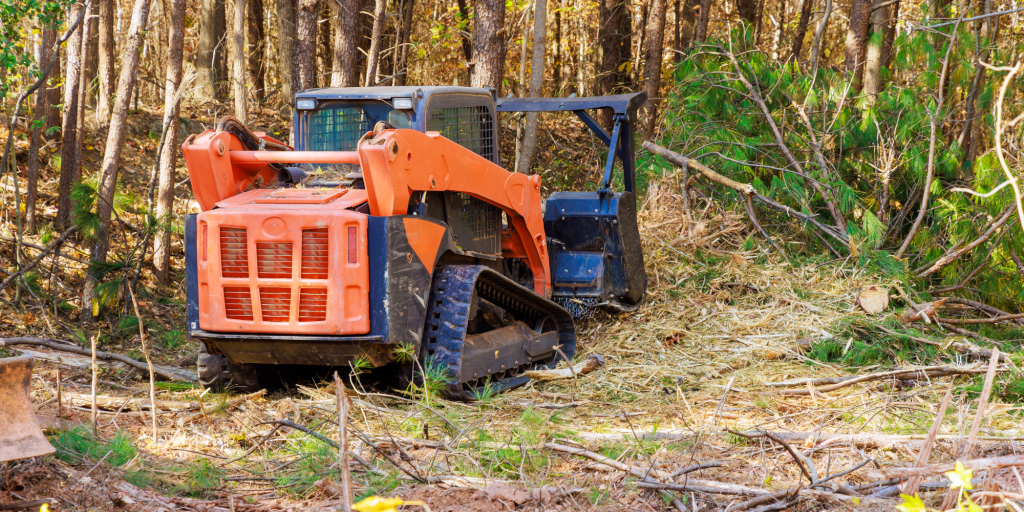
Forestry mulching can reduce hauling and handling when the vegetation, terrain, access, and desired finish are a good match. One machine can cut and process brush and smaller woody growth while leaving mulch on the site. That can make it efficient for overgrown lots, trails, fence lines, invasive vegetation, selected acreage, and areas where the goal is access or vegetation control.
It isn’t automatically the least expensive method for every property. Large trees, stump removal, buried debris, major earthwork, a clean building pad, material export, or a finish-grade requirement may call for excavators, loaders, trucks, and other equipment. The useful comparison isn’t “mulcher versus bulldozer” in the abstract. It’s which equipment sequence reaches the required finish without paying for unnecessary handling.
D&R’s main land clearing and forestry mulching service page explains the wider range of lot clearing, brush clearing, excavation, grading, and site-preparation work available.
Permits and site conditions can change the project
Property jurisdiction matters, and the mailing address doesn’t settle the question. A Fort Pierce address may fall inside the city or in unincorporated St. Lucie County, and the vegetation rules aren’t identical.
- Unincorporated St. Lucie County: the county says vegetation-removal activity may require a Notice of Vegetation Removal and provides exemptions and application requirements on its official Vegetation Removal Permit Applications page.
- City of Fort Pierce: the city provides a land-clearing and tree-removal permit process and identifies protected-tree and tree-survey requirements on its official Tree Protection, Removal and Mitigation page.
Do not assume a permit is unnecessary because another property was exempt. Confirm the jurisdiction, vegetation, development plan, and current requirements for the specific parcel before work begins.
What if there is a gopher tortoise burrow?
Gopher tortoises and their burrows are protected by Florida law. The Florida Fish and Wildlife Conservation Commission says a relocation permit must be obtained before disturbing a potentially occupied burrow or conducting construction activity within 25 feet of one. Its official gopher tortoise permit page specifically includes vegetation clearing, grading, ground leveling, and heavy-equipment staging in the activities that may create a disturbance.
If a burrow may be present, stop and address it before clearing. D&R also provides gopher tortoise survey and relocation-coordination services for Florida properties.
What should a land-clearing quote define?
A useful quote should make the finish line clear. Depending on the project, it may define:
- The mapped or marked work area
- Vegetation and tree sizes included or excluded
- Whether stumps and roots remain
- Forestry mulching, cutting, grubbing, excavation, or a combination
- On-site mulch, piles, hauling, and disposal
- Access and equipment-staging assumptions
- Rough grading, finish grading, drainage, or site-preparation work
- Permit, survey, utility, protected-species, or wetland responsibilities
- Expected site condition when the crew is finished
This is where a low opening number can become expensive. If the finish is vague, work you assumed was included may be treated as an extra. Compare the result each quote promises, not only the number at the bottom.
What information helps D&R prepare an estimate?
- Property address and the part of the parcel that needs work
- Approximate acreage or dimensions
- Photos or video from several directions
- The reason for clearing: access, cleanup, construction, agriculture, fence line, code compliance, sale, or ongoing maintenance
- The vegetation present, including large trees, palmettos, invasive growth, and visible stumps
- Gate width, road access, wet areas, ditches, utilities, buildings, and nearby obstacles
- Whether material should remain as mulch, be piled, or be hauled
- The finish condition and project timeline
- Known permits, surveys, wetlands, protected vegetation, or gopher tortoise burrows
Photos are a strong starting point, but dense vegetation can hide conditions that change the job. Larger or more complex projects normally need an on-site evaluation before the final scope and price can be established.
Get a Fort Pierce or St. Lucie County land-clearing estimate
D&R Landscaping & Excavation is based in Fort Pierce and handles forestry mulching, lot and acreage clearing, brush clearing, excavation, grading, site preparation, vegetation management, and related property work. The company serves Fort Pierce, Port St. Lucie, St. Lucie County, and broader Florida project areas when the equipment, acreage, access, and scope justify travel.
Call (772) 370-9457 to discuss the property. If you want to send information first, use the Contact Us form and include the address, acreage, photos, access details, desired finish, and timeline. You can also review D&R’s St. Lucie County land-clearing and forestry-mulching services.
Land-clearing cost FAQs
Can land clearing be priced by the acre?
Is forestry mulching always cheaper?
Do I need a permit to clear land in Fort Pierce or St. Lucie County?
Can I get an estimate from photos?
Get a Fort Pierce land-clearing estimate
D&R provides land clearing, forestry mulching, excavation, grading, and site preparation in Fort Pierce, Port St. Lucie, and throughout St. Lucie County. Larger equipment projects may qualify for travel beyond the immediate area.