
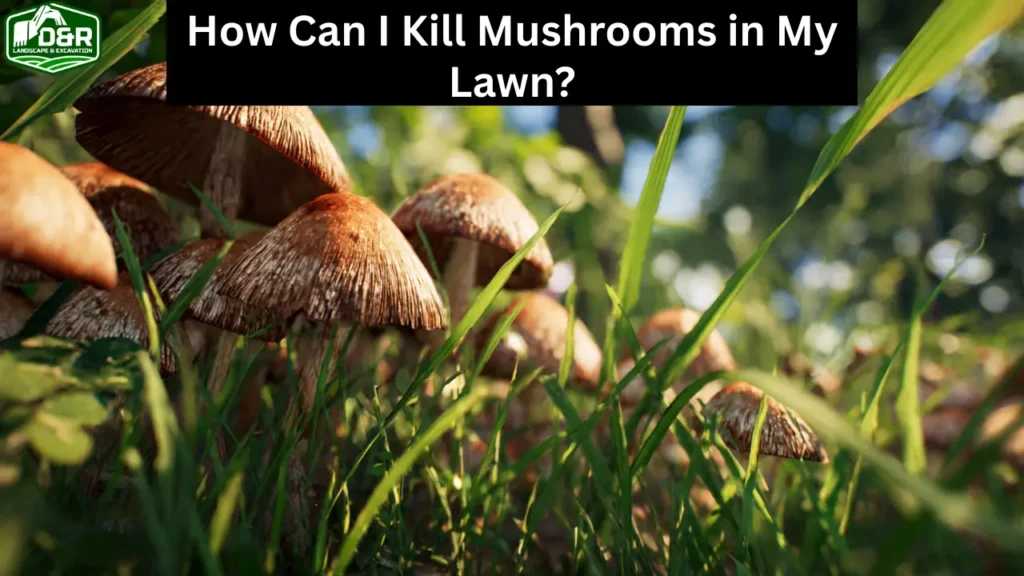
You are not the only one who has observed mushrooms growing in lawn areas. Some people rely on professionals like DNRLandscaping for help, while others prefer to handle it themselves. Mushrooms tend to sprout unexpectedly particularly following rainfall or intense watering. Although most mushrooms do not harm grass, they may be unattractive and even hazardous, when pets, or children run around the yard. The question of how can I kill mushrooms in my lawn is not as simple as removing what is visible. The trick is to know what causes them to multiply and to remove the factors which enable their flourishing. This guide outlines effective and safe ways of eliminating and deterring mushrooms in your lawn.
Table of Contents
Why Are Mushrooms Growing in Your Lawn?
Mushrooms are fungi that grow in humid soil and are fed on decaying organic substances. They may occur on any lawn, however, where drainage is poor or where there is too much shade, they are more prevalent. Knowing the origin of mushrooms prevents their recurrence.
Excess Moisture Encourages Mushrooms
Mushrooms thrive best in lawns that are not dry. The soil might be kept wet by overwatering, extended periods of rainy seasons or when the soil has poor drainage. This moist environment enables the growth of the fungi and growth of noticeable mushrooms on the air.
Decaying Organic Matter Feeds Fungi
Fungi are fed by organic matter found below the soil e.g. dead tree roots, fallen leaves, old mulch, and grass clippings. Thatchy lawns and wood buried lawns are especially susceptible to mushrooms. Mushroom can be grown over months or years even when the soil on which it is growing is healthy, as long as there is buried organic material.
Shade and Poor Air Circulation
Mushrooms are one more species that grow in dark and shadowy environments. Trees or shrubs that block the lawns are good at retaining moisture which produces a wet environment where fungi thrive. The lack of air circulation also contributes to the issue, and soil is not capable of drying effectively.
Can Mushrooms Damage Your Lawn?
Although mushrooms are usually harmless to grass, there are situations when they cause troubles. Firstly, certain mushrooms are poisonous, and this fact makes them hazardous when consumed by pets or children. Moreover, big masses of mushrooms are aesthetically distasteful and create a sense of a poorly maintained lawn. In extreme instances, too much mushroom can be a problem as it can grow between the roots of the grass but in the majority of instances, it is just a sign that your soil contains a high amount of organic material.
How Can I Kill Mushrooms in My Lawn?
The process of eliminating mushrooms needs a mix of short and long-term work. Removing mushrooms by just pulling them off the lawn does not kill the fungi below the ground hence a comprehensive strategy has to be employed to ensure they do not recur.
Remove Mushrooms Immediately
The initial process in managing the mushrooms in the lawn is to remove them by hand. Using gloves, carefully remove the mushrooms out of the ground, being careful to leave as much of the stem as you can. Mushrooms have spores, and they should therefore not be composted but placed in a bag. Although this does not eliminate fungi underneath, it decreases the transmission of spores and inhibits the development of new mushrooms in the near future.
Kill Mushrooms Naturally
Surface mushrooms can be controlled using natural therapies safely. When water is added to vinegar, it can be sprayed directly on the mushroom cluster to kill. Another easy remedy is the use of dish soap mixed with water and this inhibits fungal growth. Baking soda sprayed around mushrooms can also be used to inhibit their growth by changing the pH of the soil slightly. Such techniques are effective on small patches and are best suited to the homeowners who do not want to use chemicals.
Address the Fungus Underground
In mushrooms that recur, it is important to address the fungus in the ground. This includes eliminating latent organic elements, including decomposing wood or roots that serve fungus as food. Scraping up deep mats and applying to the soil will also aid in way of lowering moisture content and increasing the amount of air in place, rendering the environment less conducive to fungus growth. The best method of preventing the reoccurrence of mushrooms is by treating these underlying factors.
Use Fertilizers to Reduce Fungus Food Sources
The use of a fertilizer rich in nitrogen can accelerate the breakdown of organic matter below the soil. Mushrooms are not likely to grow when the fungus loses its food source. Frequent fertilization does not only contribute to healthy grass development, but it also prevents fungal growth in the lawn over time.
Long-Term Prevention of Lawn Mushrooms
To avoid the recurrence of mushrooms, regular practices in lawn care are needed. Watering is an important part and it should be watered heavily in the morning and the soil should dry between watering. Wet soil promotes fungus, so one should not water at night. Excessive moisture can be avoided by improving the drainage systems by aeration, soil amendments or leveling of low areas. It is better to eliminate fallen leaves, old mulch, and grasses to decrease the amount of organic material consumed by fungi. Moreover, it is possible to get rid of overgrown trees or bushes, which will provide the soil with even more sun and prevent the development of mushrooms.
Should You Use Fungicides?
Although fungicides may temporarily kill mushrooms that are visible to the eye, they are seldom effective in destroying fungi beneath. Due to the ability of mushrooms to reappear despite being treated with chemicals, it is usually recommended to use fungicides only in case of severe infestations. Prevention and natural methods including elimination of rotting materials and enhancement of drainage of soils are often more effective in the long term.
How Long Does It Take to Get Rid of Mushrooms?
Mushrooms have different time periods of removal. By removing them manually, one gets rid of visible mushrooms in the moment, although new mushrooms might grow under favorable conditions. It may require several weeks or months before the mushrooms do not come back by improving drainage and eliminating buried organic matter. The long-term control can be attained through patience and regular care of the lawn.
Common Mistakes That Make Mushrooms Worse
Mushrooms can easily be promoted by unscrupulous homeowners. Overwatering makes soil moist, and it favors the growth of fungi. The fallen leaves or grass clippings left on the lawn serve as extra food to the fungi. There is disregard of thatch accumulation which entraps water and promotes mushroom development. Mushrooms may be spread by composting or by simply leaving them in the yard, which leads to new clusters to occur. Correct lawn care activities avoid such errors, and minimize the chances of mushrooms reoccurring.
FAQs About How Can I Kill Mushrooms In My Lawn?
What kills mushrooms in lawns instantly?
Vinegar spray and manual removal have been shown to be fast and effective with regards to removing visible mushrooms. Nevertheless, the root cause can cause the underlying fungi to remain, unless it is tackled.
Will vinegar kill lawn mushrooms?
Yes, vinegar will kill surface mushrooms in contact. Spray to the mushrooms only without touching other grass to damage it.
Why do mushrooms keep coming back?
Mushrooms grow back when fungi underground still have moisture and organic material to digest. To prevent the regrowth, it is necessary to improve drainage and to eliminate decaying matter.
Are lawn mushrooms dangerous to dogs?
There are also mushrooms that are poisonous to pets. Identifying safe mushrooms is not easy, therefore, it is preferable to remove them as soon as possible.
Do mushrooms indicate a healthy lawn?
In rare cases, where the soil contains a lot of organic matter, mushrooms may also be a sign. Nevertheless, they normally appear due to excessive moisture or covered rotting remains.