
Artificial turf has gained a lot of popularity because of home owners who wish to have a beautiful green yard without the problems associated with grass. Artificial turf is a lasting and economical alternative to maintaining your outdoor spaces to have them look pristine throughout the year. You may also be asking yourself, how do you lay artificial lawn, in that case you are not alone.
At D&R Landscaping, we’ve seen how proper planning and correct installation can completely transform a yard while adding long-term value to a property. If you’re wondering how do you lay artificial lawn, this complete guide will walk you through every step, from surface preparation to final finishing, whether you’re installing over an existing lawn or directly on dirt.
Table of Contents
Why Choose an Artificial Lawn
There are numerous advantages over artificial grass to natural lawns. The most attractive feature of this to homeowners is the low maintenance. Mowing, watering, and fertilizing are not necessary, and this saves time and money. The artificial lawns are also very resilient and able to accommodate pets, children and high traffic without signs of wear. They are very vigorous all through the year and give it a green appearance despite the weather conditions.
Besides the aesthetics, artificial turf in a way is friendly to the environment since it does not require chemical fertilizers, and it does not use much water. Although the upfront expenses might be more than sowing natural grass, artificial grass will save more in terms of maintenance in the long run.
Planning Your Artificial Lawn Installation
Planning is very important before you start laying artificial turf. First, you must take the size of your area to be covered and this will help you to know how much turf, base material and tools you will require. Draw up the area with a tape measure and marking paint and place the surface on a level to check that there is a proper grading. It is also a part of proper planning that determines which way the grass blades are going to be turned and where the seams will be placed so that it will appear to look natural.
The artificial grass should be selected based on the pile height, density and the UV resistance. The grass can be of a green and natural appearance with the use of higher piles and denser grass, and the resistance to UV will make sure that the grass on your lawn will not fade in the sun. Furthermore, think of the main purpose of your lawn. In the regions containing pets, use turf that is more drainable and durable.
Tools and Materials Needed
Artificial turf installation does not demand a lot of special tools and materials. This will require a utility knife to cut the turf, rake to base, plate compactor to tighten up the soil and turf nails or stakes to hold the edges. Adhesive and seaming tape can be used to connect various pieces of turf together.
In materials, the bottom would be made of crushed rock or decomposed granite and optional weed membrane may be employed to deter any unwanted vegetation growing in your turf. Silica sand or rubber granules have been used as infill materials to pump up the blades and enhance the durability and drainage of the lawn. Every tool and material is extremely important in securing a durable and authentic artificial grass.
Preparing the Surface
Surface preparation also varies in case you are putting the installation over an existing lawn or bare dirt.
How to Lay Artificial Grass on Existing Lawn
In the case of artificial turf on a lawn that is already present, the initial move is to remove the natural grass. Shovel up the surface layer of grass and soil. This gives the surface a level look. Cleanup all debris, roots and stones because any organic material still there will lead to bumps or uneven settling with time. Once cleared, then clear the ground and ensure that it drains well. Minor slopes are needed to avoid stagnating of water on your new lawn.
How Do You Lay Artificial Lawn on Dirt
Artificial grass when laid on top of soil will require more preparation. Start by grading the ground and eliminating the big rocks and roots or debris. The slope should be slightly steep, 1-2 percent in order to move the water off and not stagnate. It is essential to compact the soil; otherwise, the turf laid on uncompacted soil may have uneven surfaces and will not be so durable. In other situations, it is advisable to provide a layer of base material immediately on top of the soil and bring about stability.
Building a Stable Base
Probably one of the significant things in the installation of artificial lawn is the creation of a solid foundation. Begin by hollowing 3 to 4 inches to eliminate topsoil and any loose soil. This is followed by a layer of crushed rock or decomposed granite 2 to 3 inches deep. This layer gives the turf stability and not allowing the turf to sink with time.
After spreading the base material, plate compactor can be used to make the surface firm. Correct compaction will provide a flat surface and will minimize the maintenance problems in future. Here a weed membrane can also be placed to avoid undesired growth of the plants. Lastly, ensure that the base is even, smooth and well sloped to drain the water. The secret of a lawn that will show up well and last many years is to have a well prepared base.
Laying the Artificial Lawn
When the surface and base have been ready the artificial grass can be laid. Begin by laying the turf across your area that you have prepared, making sure that the blades are facing into the same direction giving it a uniform appearance. In case the turf has been rolled tightly, it is good to leave it to run loose in a few hours before cutting.
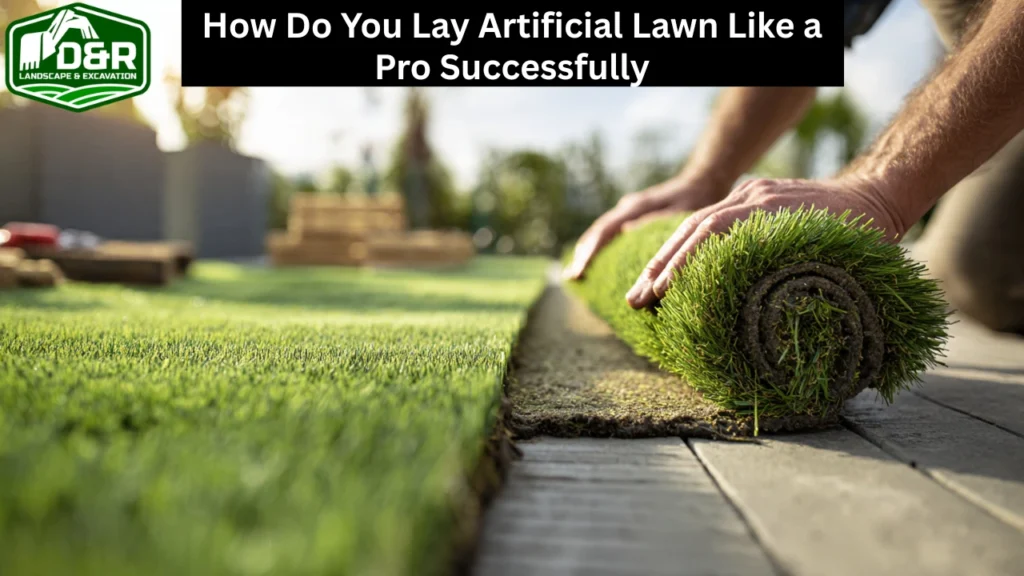
The next step is to trim and shape the turf. With a sharp utility knife score edges around the curves, obstacles and borders so that the lines are smooth and the finish professional. In case of connecting several pieces of turf, seam tape and adhesive are used. Make sure that the blades are placed together to conceal the seams that is important to ensure the look of naturalness is obtained.
It is advisable to use turf nails or galvanized stakes to secure the edges, and the distance between them is about 4-6 inches. This discourages the movement or rising of the turf particularly in the high-traffic sections.
Finishing Touches
Once the turf is laid and the turf secured, it is possible to add infill to make the turf more durable and look like natural grass. Scatter silica sand or rubber grain all over the lawn and rub against the direction of the blade. This raises the grass, makes it stand erect, and it enhances drainage.
The last brushing is done to make the turf blades high and natural-like. Ensure that all seams, edges and corners are checked to ensure that everything is fixed. At this stage, your fake grass must look just like a natural lawn which is lush and green without the care.
Maintaining Your Artificial Lawn
Artificial grass is easy to maintain but to ensure that it looks good. Clean the surface by washing every day. Brush the blades after sometime to avoid matting and have an upright appearance. Immediately clear the leaves, twigs and any other debris to prevent staining or flattening the grass.
In case you own pets, clean up the rubbish as soon as possible to avoid bad smell. The artificial lawns do not need watering, fertilizing, and mowing as natural grass would, and this is why their maintenance is rapid and easy.
Common Mistakes to Avoid
There are a number of misconceptions that may decrease the look and life span of your artificial lawn. Without base preparation, the surface may not be very even, drainage may not be effective, and the wear may occur prematurely. Turf laid directly on dirt without compaction and earth base material can tend to lump and become unstable. Such flaws as poor seam alignment and lack of edge securing may result in visible seams and turf movement. These errors can be prevented to have a professional and long-lasting installation that will be used over years.
Conclusion
An artificial lawn will make your lawn a low maintenance, all-year-round oasis. Using the instructions in this tutorial on how do you lay artificial lawn, including how to lay artificial grass on existing lawn and how do you lay artificial lawn on dirt, , you can have a gorgeous, well lasting lawn that will give your home a beautiful look. The right planning and preparation and finishing touches are what will enable one to have a wonderful lawn with minimum maintenance over the years to come.
FAQs About How Do You Lay Artificial Lawn?
Can you lay artificial grass directly on soil?
It is not advisable to use turf that is freshly laid on soil without a preparation. To be stable and well drained, compaction and a base layer is necessary.
How long does installation take?
In small yards installation time is a day whereas in larger areas, it could take 2-3 days depending on complexity and the size of the team.
Do I need professional help?
Although installation can be done by hand, it is better to pay a professional who will make sure that it is graded, seam lines placed correctly and that the drainage is also taken care of which will give a more natural and lasting lawn.