Forestry mulching is usually the better fit when you want brush, palmettos, invasive growth, and smaller woody vegetation processed on site. Traditional land clearing is usually the better fit when large trees, stumps, buried debris, hauling, excavation, or a clean site-preparation finish are part of the job. The practical question isn’t which machine sounds better. It’s what has to be gone—and what condition the property needs to be in—when the work is finished. Many Florida properties need a combination of both methods.
The right choice depends on what is growing, what is hidden underneath it, how equipment can reach the work area, and what you need the property to look like afterward. For a property-specific recommendation, call D&R Landscaping & Excavation at (772) 370-9457 or send the address, acreage, photos, and project goals through the Contact Us page.
What is forestry mulching?
A forestry mulcher cuts and processes vegetation into smaller material that remains across the ground. That makes it useful for opening overgrown areas, reclaiming trails and fence lines, reducing invasive vegetation, maintaining acreage, and improving access without loading every piece of brush into a truck.
Because suitable vegetation is processed where it stands, forestry mulching can reduce handling and hauling. The remaining material provides surface cover while it breaks down, but it is not the same as finished topsoil, imported landscape mulch, or a prepared building pad.
What is traditional land clearing?
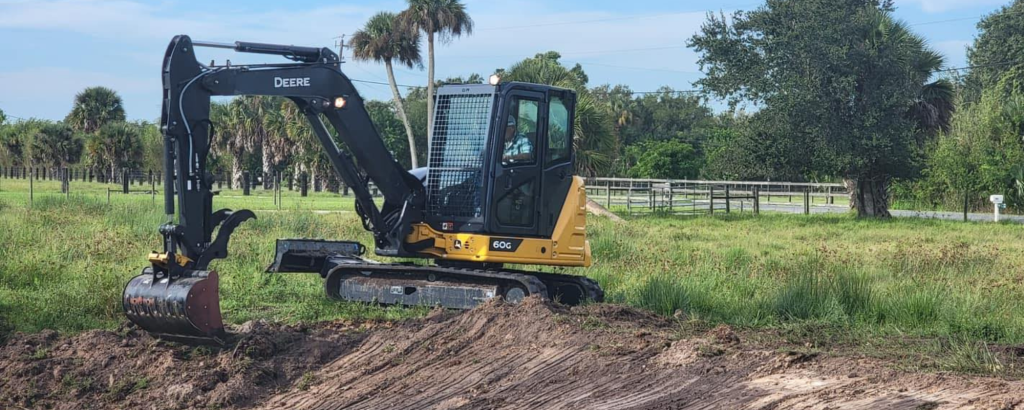
Traditional clearing uses equipment such as excavators, skid steers, loaders, saws, trucks, and attachments to cut, pull, dig, pile, load, haul, and shape a site. It can remove larger trees, stumps, roots, surface debris, and material that a mulcher should not process.
This route is often necessary when the next step requires excavation, a rough or finish grade, drainage work, building access, a cleaner surface, or the physical removal of stumps and debris. If another contractor needs to build, trench, pave, fence, or install utilities afterward, “the brush is gone” may not be a usable handoff.
When does forestry mulching make sense?
- The main problem is dense brush, vines, palmettos, invasive vegetation, or smaller woody growth.
- You want to open trails, fence lines, access routes, or selected areas without clearing the entire parcel.
- Processed vegetation can remain on site as surface mulch.
- The project does not require every root and stump removed.
- Reducing hauling and piles would simplify the work.
- The goal is vegetation management, visibility, access, or acreage maintenance rather than immediate construction preparation.
Forestry mulching can also be selective. Valuable trees and designated areas can remain while overgrowth is reduced around them, provided there is enough safe equipment access and the marked scope is clear.
When does traditional clearing make sense?
- Large trees, heavy stumps, and root systems need to be removed.
- Concrete, fencing, dumped material, or other surface debris is present.
- Vegetation and debris must be hauled away rather than left on site.
- The property needs excavation, grading, drainage, a building area, a road, or equipment access for the next phase.
- The desired finish is cleaner than a mulched vegetation surface.
- The site contains material a mulcher cannot safely or effectively process.
Traditional clearing can create a more construction-ready result, but the scope must state what “ready” means. Removing brush is different from removing stumps, correcting elevations, compacting fill, and preparing a finished pad.
Why do some properties need both methods?
A property may have acres of brush that can be mulched efficiently along with a building area where trees, stumps, and soil must be removed or reshaped. Another project may use mulching to expose the site first, then bring in an excavator for specific trees, drainage, or grading work.
Combining methods can keep expensive equipment from doing work another machine handles better. The sequence should follow the final goal—inspect, clear, remove, haul, grade, or prepare—not a one-machine promise made before the site is understood.
How do the finished results differ?
- Forestry-mulched finish: reduced vegetation, organic material across the surface, many roots and stumps remaining, and improved access or visibility.
- Cleared finish: selected vegetation, trees, stumps, and debris removed according to scope, with piles or hauling handled separately.
- Graded finish: soil elevations shaped for access, drainage, landscaping, or the next construction step.
- Site-preparation finish: a project-specific combination of clearing, excavation, material movement, drainage, compaction, and grading.
Ask the contractor to describe the finish in plain terms. Will stumps remain? How much mulch will remain? Is hauling included? Is the surface rough or graded? Most importantly, can the next phase actually begin, or is another crew and another round of equipment still required?
Which method costs less?
There is no universal answer. Forestry mulching may cost less when it replaces cutting, piling, loading, trucking, and disposal for vegetation that can remain on site. Traditional clearing may be more direct when stumps, large trees, debris, excavation, and grading are unavoidable parts of the finish.
Cost is shaped by acreage, vegetation density, tree size, access, ground conditions, equipment, hauling, disposal, permits, protected-species considerations, and the finish you need. A smaller difficult lot can require more careful handling than a larger open property.
What should be checked before either method begins?
- Property boundaries and the exact work area
- Underground and overhead utilities
- Buildings, fences, wells, septic systems, culverts, ditches, and neighboring property
- Wetlands, drainage paths, and unstable ground
- Local vegetation, tree-removal, and land-clearing requirements
- Protected vegetation or wildlife
- Gopher tortoise burrows and required buffers or permits
- Equipment entrance, turning, staging, and truck access
The Florida Fish and Wildlife Conservation Commission says development activity—including clearing, grading, ground leveling, and heavy-equipment staging—within 25 feet of a potentially occupied gopher tortoise burrow may require a relocation permit. Review the current FWC gopher tortoise permit guidance before disturbing a possible burrow.
How should you choose for your property?
Start with the result, not the equipment name. Tell the contractor why you are clearing, which areas must remain, what must be removed, whether material can stay on site, and what needs to happen next. Photos and acreage help, but an on-site evaluation may be necessary when vegetation hides the ground or when access, drainage, utilities, trees, and permits affect the plan.
D&R provides forestry mulching, land clearing, excavation, grading, and site-preparation services from its Fort Pierce base. For work in Fort Pierce, Port St. Lucie, St. Lucie County, the Treasure Coast, and broader Florida project areas, call (772) 370-9457. You can also send the property address, acreage, photos, access details, desired finish, and timeline online.
For local service details, see D&R’s St. Lucie County land-clearing and forestry-mulching page.
Forestry mulching vs. land clearing FAQs
Does forestry mulching remove stumps?
Can forestry mulch be left on the ground?
Which method is better before building?
Can one project use both forestry mulching and excavation?
Choose the right clearing method for your property
D&R handles forestry mulching, land clearing, excavation, grading, and site preparation across the Treasure Coast, Okeechobee, Palm Beach County, and the Space Coast. Larger qualifying equipment projects may extend into Central Florida and other Florida service areas based on acreage, access, scope, and schedule.