
Squirrels can dig up seeds and damage vegetables. Match protection to the damage you observe rather than promising permanent exclusion from an open garden. If you want to minimize your effort so contact DNRLandscaping because they will cover everything for you.
Start by identifying what is being damaged. Protecting a seed bed is a different job from preventing access to ripening fruit.
Why Squirrels Keep Coming to Your Garden
Watch where squirrels enter and what they eat or dig up. That shows where a barrier is likely to help. Seeds, fruit, vegetables, and bird food can attract squirrels. Loose soil may also be disturbed when they bury or search for food. Removing one food source may not stop visits if other food is nearby. Protect the plants you need to keep rather than expecting an empty yard. Plan protection before seedlings or fruit become vulnerable. Repair barriers when you notice a new opening.
How to Keep Squirrels Out of Garden Effectively
Combine a suitable barrier with removal of accessible food such as spilled birdseed. Do not depend on one scent or decoy.
Physical Barriers That Stop Squirrels Completely
Why barriers work best
A secure barrier physically limits access. It needs to exclude squirrels at the sides and top where they can climb or jump in.
How to use them properly
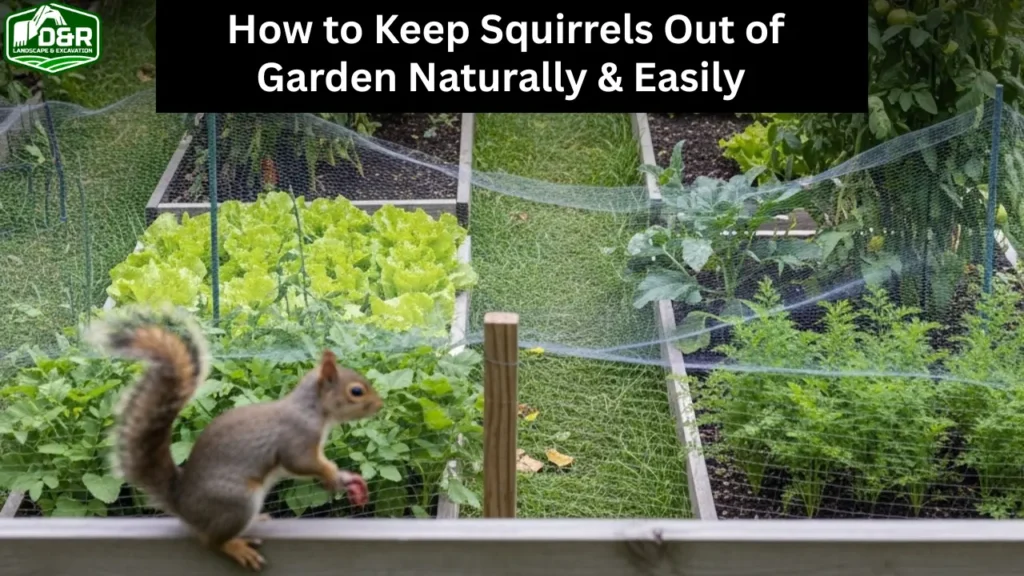
Use suitable mesh or hardware cloth with a frame that leaves room for the plants. Secure edges and avoid loose netting that could entangle wildlife. A temporary cover can protect a small seed bed. Check it regularly and remove or adapt it as the plants grow. For vegetable beds, include a way to open the cover for tending and harvesting. A barrier you cannot maintain is likely to be left open.
Removing What Attracts Squirrels
Food control is essential
Protective cages can work even when squirrels remain nearby. Reducing easy food sources helps limit the reasons for repeated visits. Clear fallen fruit and spilled birdseed and secure food waste. Check whether a feeder is drawing squirrels close to the bed.
Changing the environment
Keep compost contained and clean up edible scraps. Tidiness reduces some attractants but will not make the entire garden squirrel-proof. Judge success by less damage to the protected crops, not by whether squirrels disappear from the neighborhood.
How to Keep Squirrels Out of Garden Naturally
Exclusion and food management are useful options when you want to avoid sprays. Natural repellents should not be assumed safe or effective.
How natural repellents work
Scent-based products have variable results. Squirrels may return, especially where food remains accessible.
Effective natural solutions
Avoid spraying homemade mixtures of vinegar, chili, or essential oils onto plants. They can cause unwanted damage or exposure and do not provide reliable exclusion. If you use a commercial repellent, follow its label for the crop, location, and reapplication. Do not use a product on edible plants unless permitted. Keep barriers as the main protection rather than repeatedly increasing the strength of a homemade spray.
Using Plants as Natural Defense
How plants help protect your garden
Companion plants do not form a dependable squirrel barrier. Choose plants for the garden’s conditions and protect vulnerable crops directly.
Best planting strategy
Mint, garlic, and onions may suit parts of the planting plan, but do not rely on their smell to exclude squirrels. Squirrels may damage flowers and bulbs too. A flower border does not make the bed inaccessible. Use any planting choice alongside a protection plan suited to the damage you observe.
Protecting a Vegetable Garden Specifically
Vegetable beds need protection that still allows watering, pollination, and harvest.
Why vegetables are high-risk
Ripening produce and newly planted seeds can be vulnerable. Watch which crops are affected before enclosing the whole garden.
Best protection methods
A well-fitted cage or cover can protect a small crop area. Leave room for growth and maintain access for care. Inspect gaps around stems and edges. A squirrel may reach through an opening even without entering the cage. Check protection after garden work and storms so it remains effective through the growing season.
Scaring and Deterring Squirrels
Temporary but useful solutions
Startling devices may offer temporary help, but animals can become accustomed to them. A motion-activated sprinkler may discourage visits in some situations. Consider water restrictions, people, pets, and where the spray will land. Decoys and reflective objects may have short-lived effects. Do not treat them as a substitute for physical crop protection.
Blocking Entry Points to Your Garden
Squirrels can approach from branches, fences, and nearby structures. A ground-level fence alone may not exclude them. Look for routes into the protected area. Do not remove major branches or damage trees simply to eliminate every possible approach. Secure the crop enclosure at all accessible points. Keep checking rather than assuming the first installation is permanent.
Common Mistakes That Make the Problem Worse
A common problem is protecting a bed while leaving an easy food source right beside it. Another is relying on a spray while gaps remain in the cover. Check the barrier and nearby food before trying another product. Use the combination that reduces observed damage. No plan guarantees permanent exclusion from an open garden.
Long-Term Strategy for a Squirrel-Free Garden
Squirrels can keep visiting a neighborhood even when one bed is protected. Set a realistic target: less crop damage. Maintain secure covers, manage accessible food, and adjust protection as plants grow. Add repellents only where a suitable label permits them. Regular inspection is more useful than a promise of a permanent cure.
Conclusion
For how to keep squirrels out of garden spaces, start with the crop and the entry route. Suitable barriers provide a clearer way to protect plants than relying on scents.
Review the result after a few days and after each change. Repair openings and keep the protection practical to use.