
Before a delivery or construction truck crosses your front lawn, confirm permission, access rights, and local restrictions. Heavy vehicles can damage grass and underground equipment even during a short visit. If the property needs repairs afterward, DNR Landscaping can help assess the lawn work.
Separate the access question from the damage question. Permission alone does not answer either one.
Is It Legal to Drive a Truck Onto a Front Lawn?
The answer depends on the location, ownership, recorded access rights, and applicable rules.
Driving a Truck on Your Own Lawn
Owning the lawn does not automatically make vehicle access or parking lawful in every situation. Ask the local code office whether lawn parking or temporary construction access is restricted at your address. Check applicable HOA rules and project conditions before arranging a delivery. Repeated traffic can compact soil. Wet ground is especially vulnerable to ruts.
Driving on Someone Else’s Lawn
Do not assume a driver can cross another person’s lawn without authorization. Florida’s trespass statute includes requirements concerning authorization, notice, and circumstances. An uninvited crossing is not automatically enough to establish every element of an offense. Vehicle damage is a separate issue. Photograph ruts and damaged irrigation components, and record who was involved.
When Permission Makes It Legal
Agree on the access route before the truck arrives. Put any protection and restoration responsibilities in writing. Permission does not settle every question about repair costs. Make sure the driver receives the agreed instructions.
Property Lines and Right-of-Way Rules
A lawn’s appearance does not establish its legal boundary or access rights. Check the survey and recorded documents before deciding who controls the strip beside the road.
Roadside Grass May Be Public Right-of-Way
The verge may fall within a public right-of-way or be subject to an easement, even if you maintain its grass. A right-of-way is not blanket permission for every truck to turn or park there. Confirm the permitted use with the responsible authority. A licensed surveyor can help locate boundaries. Recorded documents establish rights that a boundary marker alone may not show.
Utility Easements and Access Rights
A utility easement can allow specified access across private land. The recorded terms and applicable law determine the scope of that access. Ask the utility about the planned route. Ask who will restore disturbed ground and what that restoration includes; do not assume it is guaranteed.
Why Property Boundaries Matter
A neighbor’s understanding of the boundary may differ from yours. Review the relevant records before escalating a disagreement.
When Driving a Truck on a Lawn Becomes Illegal
Access can violate property rights or local rules, depending on the circumstances.
Trespassing and Unauthorized Access
For a disputed crossing, document what occurred and seek a case-specific answer rather than treating every incident as an established crime. A neighbor generally cannot grant rights over land they do not control. Confirm authority before relying on their directions. Keep a record if unwanted crossings recur.
Lawn Damage and Liability
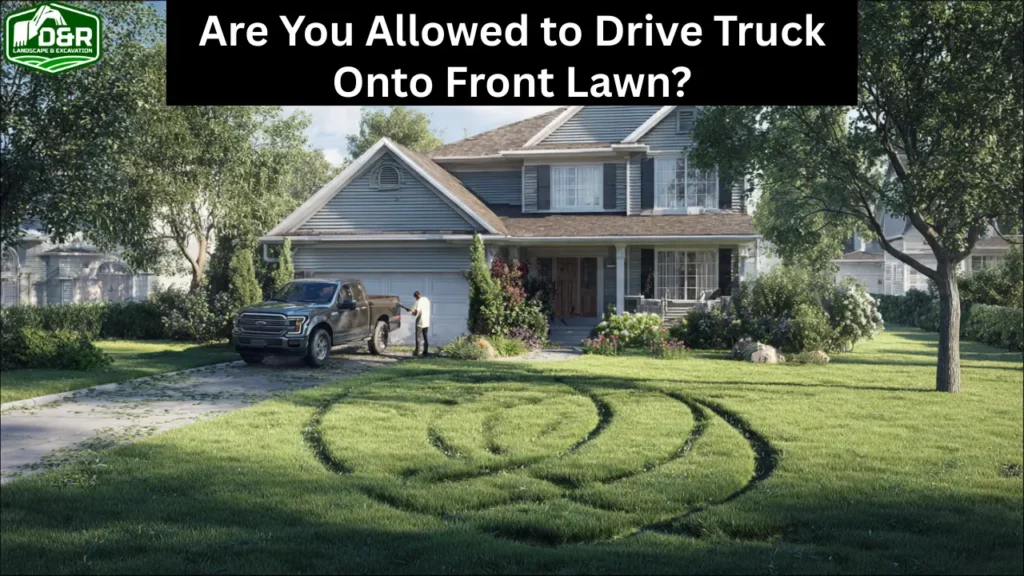
Heavy loads can compact soil and create deep ruts, particularly when it is wet. Assess damaged grass, grade, sprinkler heads, and buried lines before deciding on soil repair or turf replacement.
Questions about lawn damage liability depend on the facts, agreements, and applicable law. Responsibility is not automatically assigned to one party.
Keep photographs, delivery details, correspondence, and repair estimates.
Local Parking and Property Laws
Local rules may restrict parking on landscaped areas. Driving through and parking are different activities; ask about the rule that applies to the actual use. Check current requirements before making lawn access a routine arrangement.
Can Construction Trucks Drive Onto Your Lawn?
Construction access should be planned as part of the job.
Why Construction Trucks Use Lawns
A truck that cannot fit the driveway needs an agreed alternative route, not an assumed right to use nearby grass. Discuss turning space, overhead clearance, weight, and underground equipment before delivery. If there is no safe, lawful route, ask about a smaller vehicle or another delivery method.
Who Pays for Lawn Damage
Contact the contractor or delivery company promptly about damage and ask how to submit a claim. Do not assume a neighbor or insurer must pay without reviewing the circumstances and coverage. Provide photographs and a written description before repairs obscure the evidence.
What To Do If a Truck Drives on Your Lawn
If a truck enters unexpectedly, keep clear of the vehicle and document the incident safely.
Speak With the Driver or Neighbor
Explain the access limit to the driver or company when it is safe to do so. If a neighbor arranged the work, share the concern and ask them to pass along the correct route. Clear instructions can resolve a misunderstanding without guaranteeing that every dispute will end quickly.
Confirm Property Boundaries
Use the survey and recorded documents to investigate a disputed boundary. A tax record or your mowing pattern alone does not settle the access question.
Document Any Damage
Photograph tire tracks, damaged grass, and broken equipment. Record the date, vehicle details, and people or companies involved. Obtain a repair assessment if you intend to request compensation.
Contact Local Authorities
For recurring unwanted access, ask the relevant local office about rules and reporting options.
Use non-emergency channels for a routine report of trespassing concerns. Seek emergency help if there is immediate danger.
Keep subsequent correspondence with your incident records.
Request Compensation
You can request reimbursement, but payment and legal entitlement depend on the facts. Send a clear account with photographs and an itemized estimate.
How to Prevent Trucks From Driving Onto Your Lawn
Plan prevention before the next delivery.
Using Physical Barriers
Before installing stones, posts, or fencing, confirm the boundary, permits, easements, and visibility requirements. Do not obstruct required access or create a roadside hazard.
Marking Property Edges
Markers must be permitted at the proposed location and visible without endangering drivers or pedestrians. Ask the local authority before placing them in a verge or right-of-way.
Installing Warning Signs
Written delivery directions can tell drivers where to stop and where vehicle access is prohibited. Send those instructions ahead of recurring visits.
Improving Driveway Access
A driveway extension may require approval and drainage planning. Consult the local authority before adding paving or gravel. More space may help access, but does not guarantee that a truck can maneuver safely.
Are Delivery Drivers Allowed to Use Your Lawn?
Delivery convenience does not establish permission to cross a lawn. Ask the company about its access policy and provide a route the driver can follow. Report damage promptly and keep the delivery reference and photographs.
Conclusion
Confirm permission, recorded access rights, and current local rules before allowing truck access. Do not infer legality from lawn ownership alone. An agreed route, suitable ground conditions, and written restoration responsibilities can reduce confusion and repair disputes.