An artificial lawn needs a suitable base, drainage plan, and secure installation. It avoids grass mowing, but it is not maintenance-free or automatically economical at every site.
At D&R Landscaping, we’ve seen how proper planning and correct installation can completely transform a yard while adding long-term value to a property. Start by matching the selected turf system to the site and intended use.
Why Choose an Artificial Lawn
Synthetic turf does not need grass fertilizer or mowing, but still needs cleaning, inspection, and suitable care. Traffic and pets can affect its condition. Compare the full installation, maintenance, and replacement costs. Avoid assuming it is always cheaper or environmentally preferable to living turf.
Planning Your Artificial Lawn Installation
Measure the area and plan seams, fiber direction, access, and a safe drainage route. Check local requirements before changing the grade. Choose a product suitable for the intended use and exposure. Review its specifications and warranty rather than assuming density or UV treatment prevents every problem.
Tools and Materials Needed
Equipment may include cutting tools, a rake, compaction equipment, and the specified seaming and fastening materials. Follow their operating precautions. Use the base and infill specified for the system and site. Silica sand, rubber, and other materials are not interchangeable by default.
Preparing the Surface
Preparation depends on existing vegetation, soil, drainage, and the selected system.
How to Lay Artificial Grass on Existing Lawn
Remove existing turf as required for the installation, then assess the ground. Avoid indiscriminate digging around roots, irrigation, and utilities.
How Do You Lay Artificial Lawn on Dirt
Artificial grass over soil requires a suitable foundation and drainage. Do not assume a generic slope fits every property or directs water to a lawful outlet.
Building a Stable Base
Excavation and base depth should follow the site design and product requirements, not a universal three-to-four-inch rule. Compact and finish the base using the appropriate method. Check drainage before covering it; a weed membrane must not undermine the system’s drainage.
Laying the Artificial Lawn
Lay out the turf with consistent fiber direction and allow relaxation as directed before cutting.
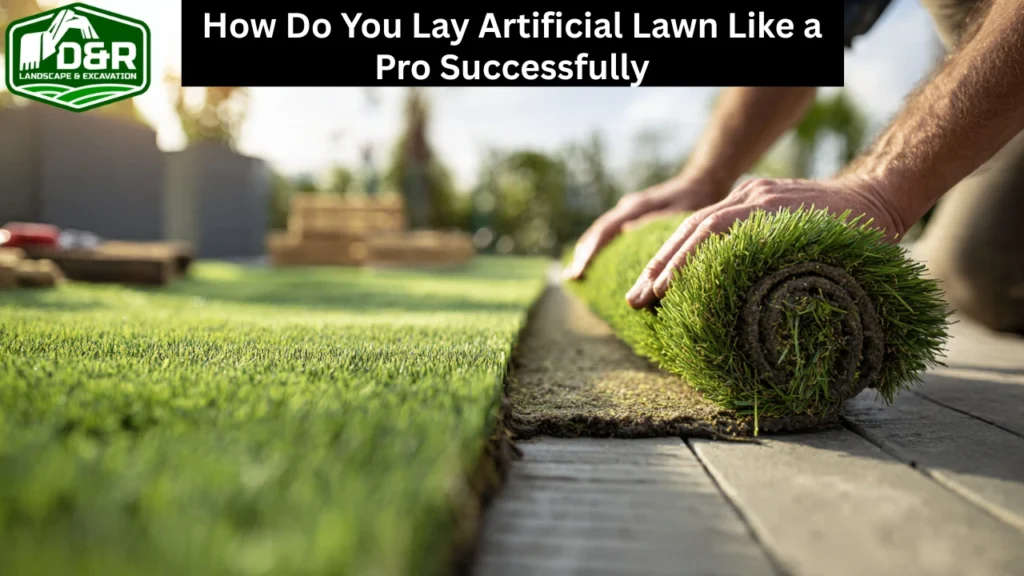
Cut carefully and make seams using the approved method and materials. Keep blades clear of hands and hidden components. Use the specified fastening method and spacing. Do not assume nails every four to six inches fit every system or substrate.
Finishing Touches
Add only the infill type and amount the manufacturer recommends, using the specified distribution and brushing method. Inspect seams, perimeter edges, and transitions for secure attachment and trip hazards.
Maintaining Your Artificial Lawn
Remove debris and brush or rinse as the manufacturer recommends. Daily washing is not a universal requirement. Remove pet waste promptly and follow approved cleaning guidance. Synthetic turf can still require water for cleaning.
Common Mistakes to Avoid
Poor drainage, an unsuitable base, incompatible infill, loose edges, and incorrect seams can undermine the installation. Inspect before calling the job complete.
Conclusion
Plan the foundation and drainage first, then follow the selected system’s installation and care requirements. Generic dimensions and claims cannot replace that design.