
Before dethatching, identify the grass and measure the layer. Watering and mowing do not establish a need for this disruptive job. Sometime requires professional help like DNR Landscaping, they provide best lawn care in Florida.
What Is Dethatching a Lawn and Why It Matters
Thatch is a layer of living and dead stems, roots, and other organic material between the soil and green turf. It is not a layer of soil, and a small amount can be normal.
Dethatching removes excessive organic buildup; aeration addresses compaction with holes or soil cores. Neither is automatically needed on every lawn.
Signs Your Lawn Needs Dethatching
A spongy surface or poor water movement can prompt inspection. High foot traffic lawns may also have compaction, which is a different problem.
Cut a small sample and measure thatch depth, not its weight. Use a species-specific threshold rather than the article’s former six-centimeter rule.
When Should I Dethatch My Lawn?
Plan disruptive work when the grass can recover, avoiding dormancy, drought, disease, and unsuitable ground conditions.
Dethatching Cool-Season Grasses
Cool-season turf needs its own regional guidance. Its calendar should not be copied onto a Florida warm-season lawn.
Dethatching Warm-Season Grasses
For warm-season turf, choose an appropriate period of active growth and a method suited to the species.
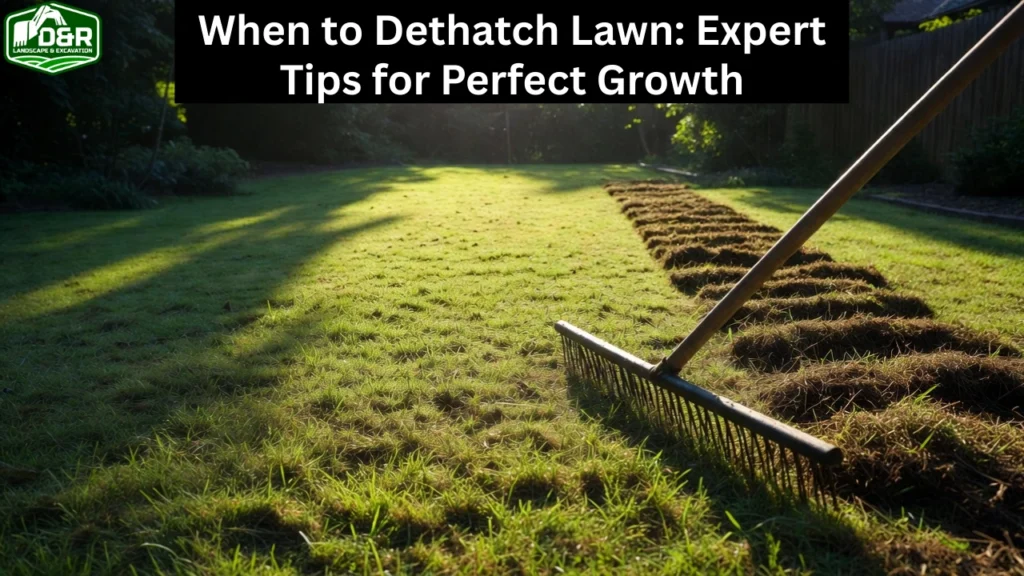
Good timing helps recovery but cannot make an unsuitable tool harmless.
How Often to Dethatch Lawn
Inspect before deciding on frequency. Do not dethatch on an automatic annual or multi-year schedule. Measure the actual buildup and investigate excessive growth or maintenance problems.
Step-by-Step: How and When to Dethatch Lawn
The grass, depth, and equipment determine the method.
Step 1: Check Thatch Depth
UF/IFAS advises considering removal when St. Augustinegrass thatch exceeds one inch. Other species have different guidance; half an inch is not a universal trigger.
Step 2: Select the Right Tool
Use equipment suited to the turf. Aggressive flexible-tine rakes can damage spreading stems. Follow the manual and protective precautions.
Step 3: Dethatching Process
Use the recommended blade spacing, depth, and direction. For St. Augustinegrass, do not automatically make a perpendicular second pass.
Step 4: Post-Dethatching Care
Remove debris and provide appropriate recovery care. Do not automatically overseed, fertilize, or add another disruptive operation to every lawn.
Best Conditions for Dethatching
Avoid saturated or excessively dry ground. Check that conditions support recovery before beginning. Postpone work after heavy rain until the ground is suitable.
Common Dethatching Mistakes
Common problems include unnecessary treatment, unsuitable tools, excessive depth, and poor timing. A damaged lawn may need a different diagnosis first.
Conclusion
Dethatch only when excessive buildup justifies it, using grass-specific guidance. Measure first and protect the turf’s ability to recover.