
Clover may be acceptable in a mixed lawn or unwanted in a turf-only surface. Identify the plant and decide on that goal before choosing control.
At DNR Landscaping, we help homeowners maintain healthy, lush, and vibrant lawns, offering practical advice and proven strategies to keep your lawn free from weeds like clover.
Understanding Clover and Why It Appears in Lawns
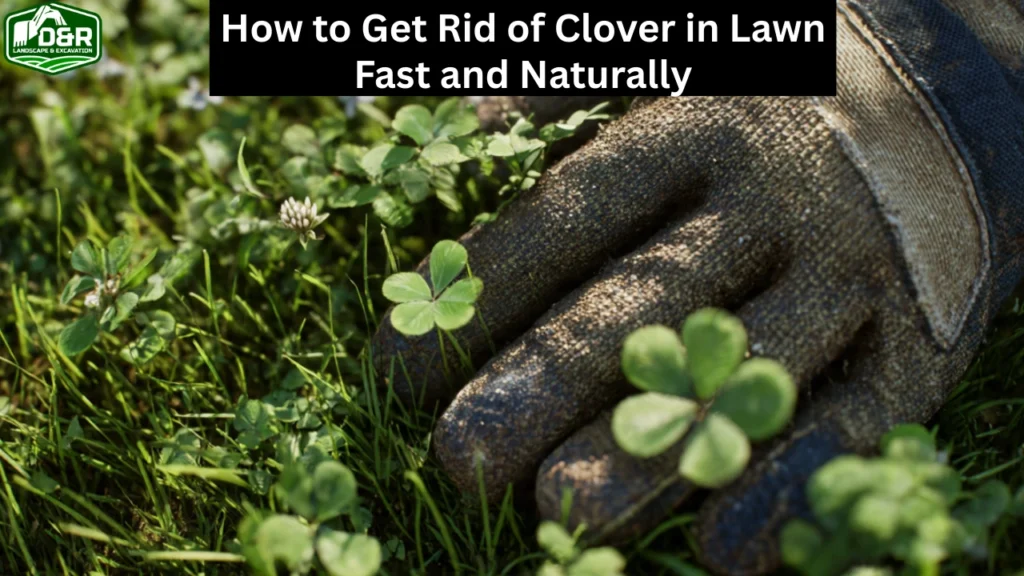
White clover spreads through seed and creeping stems that can root. In Florida it often behaves as an annual, unlike its perennial growth in some cooler regions. It can fix nitrogen through root-associated bacteria, but its presence alone does not diagnose a nutrient deficiency. Inspect why the grass is thin before adding products.
How to Get Rid of Clover in Lawn: Effective Strategies
Choose hand removal, tolerance, or a compatible labeled treatment. None promises permanent exclusion.
Manual Removal
Hand removal can suit a small patch. Remove rooted stems as well as the obvious leaves and monitor for regrowth.
Adjusting Lawn Care Practices
Good lawn care supports turf. It does not automatically stop clover. Keep the species’ recommended mowing height rather than using three inches as a universal minimum. Use the grass’s nutrient plan and current local rules. Extra nitrogen is not an automatic control method.
Aeration may help confirmed compaction, while turf repair needs a suitable planting method. Do not automatically overseed a St. Augustinegrass lawn.
How to Get Rid of Clover in Lawn Naturally
If avoiding sprays, consider hand removal or retaining acceptable clover.
Vinegar spray can damage grass and should not be treated as a safe household control recipe.
Corn gluten meal does not kill established plants. Repeated use does not give you dependable clover prevention. Fertilize and amend soil only as appropriate. Covering a patch with opaque material can also damage desirable grass; it is a renovation choice rather than selective control.
Using Chemical Controls When Necessary
A labeled herbicide may suit a larger unwanted patch, but compatibility depends on the grass and product. Follow the label’s growth, weather, and application restrictions. A generic spring-or-fall calendar is not enough. Observe dosage, protective equipment, drift precautions, and restrictions on access by people and pets.
How to Get Rid of White Clover in Lawn
White clover’s rooted creeping growth can survive incomplete removal. Monitor the patch and maintain suitable mowing and nutrient care without overfertilizing. Reassess any treatment before repeating it. Do not combine remedies simply because the first result was incomplete.
Long-Term Prevention: Keep Clover From Returning
Support healthy turf and watch for returning patches. Use aeration, nutrients, and turf repair only where needed. None requires an automatic yearly schedule for clover prevention. A maintained lawn can still contain or develop clover.
Conclusion
Start with identification and a clear goal, then select the least disruptive suitable response. Evaluate the result rather than promising a permanently uniform, clover-free lawn.