
Have you ever finished mowing and wondered what to do with lawn clippings? You are not alone. The majority of homeowners consider grass clippings a waste and pack them in bags before disposing of them in landfills. But this popular practice ignores one significant fact: lawn clipping is an invaluable one.
Grass clippings are rich in moisture and other nutrients, particularly nitrogen and can be critical in making your lawn and garden better. Regardless of whether you need some sustainable ways to maintain your lawn or you just need to save money by not hiring a lawn maintenance crew, understanding what to do with lawn clippings after mowing can make a difference. If you are in Florida then you can contact any expert like DNRlandscaping, which provide services like lawn care, lawn clearing and other.
This guide discusses real life, environmental friendly and efficient methods to reuse fresh and bagged lawn clippings to enable you to convert yard waste to a resource.
Table of Contents
What Are Lawn Clippings and Why They Matter
The small fragments that are cut by mowing of grass are called lawn clippings. Although they appear insignificant, they have a good percentage of water as well as vital nutrients that grass requires to grow. When these clippings are put back in the soil they decay fast providing nutrients back into the lawn.
This is a natural recycling process which promotes the growth of healthier grass and less use of synthetic fertilizers. It also enhances the soil structure in the long run through the enrichment of organic contents that promote water retention and aeration.
The first step to intelligent lawn care is to understand the value of the lawn clippings. You can then put them in a strategic way so as to create a more sustainable and low maintenance yard rather than eliminating them.
What to Do With Lawn Clippings After Mowing
There are also a number of good alternatives to using grass clippings after mowing. The correct method relies on factors like the condition of the lawn, weather and frequency of mowing.
Grasscycling: Let Clippings Decompose Naturally
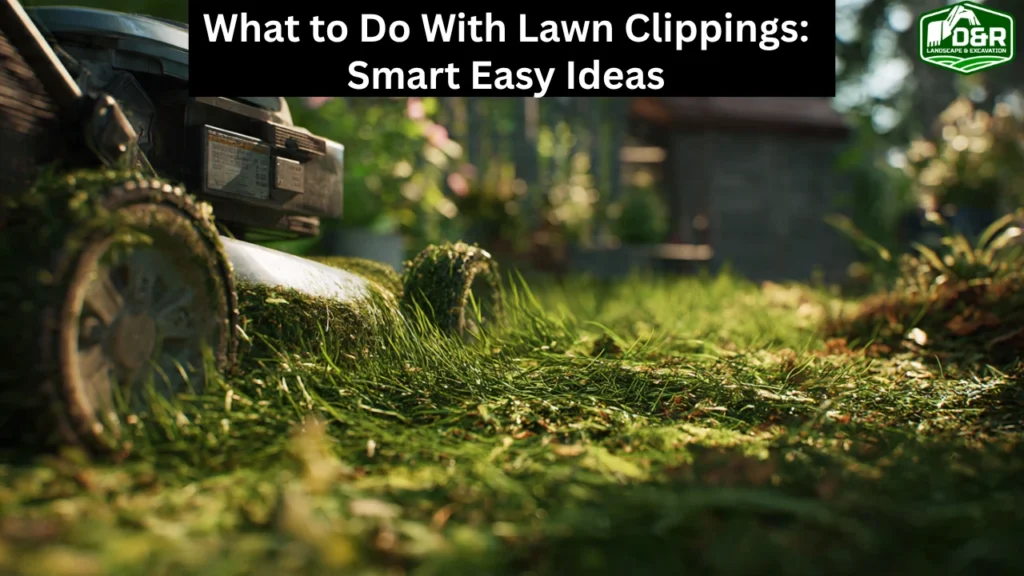
Grasscycling that is the process of leaving grass clippings on the lawn is one of the easiest and most helpful techniques to use. The decomposing clippings will give back nutrients into the soil and it will be like a natural fertilizer.
This is a time saving and energy saving approach since one does not have to bag or dispose anything. It is also more environmental friendly as it does not require your lawn to rely on chemical fertilizers.
Grasscycling is most effective when you frequently mow and use the one-third rule, which means that you should never cut the grass more than one-third of the grass height at once. Properly clipped grass is not large enough to accumulate to clumps that may damage the grass.
Using Lawn Clippings as Mulch
The next best way of using grass clippings is as mulch. The clippings will create a protective coating when used on plants, trees or garden beds, and this ensures that the soil does not run dry.
Grass clipping mulching also inhibits the growth of weeds by blocking sunlight and stabilization of the soil temperature which in itself is high during hot weather. This makes the vegetative environment healthier to plant roots and the frequent watering is minimized.
When mulching using clippings, it is necessary to spread them out in thin layers. Layers of thickness have the capacity to squash and seal air so that odors become unpleasant or there is the development of moulds. Clippings are also easier to handle when slightly dried and they do not tend to clump together.
Composting Grass Clippings for Rich Organic Matter
Composting is among the best long term applications of lawn clippings. They are said to be a green material in composting since they are rich in nitrogen.
Together with the materials that are brown like dry leaves, straw, or cardboard, grass clippings serve to make a balanced compost pile. This helps to ensure proper decomposition and avoid excessive amount of wetness in the pile and avoids the strong odor.
The compost decomposes with time into a high-nutrient material that could be applied to promote the growth of plants in the garden and also lead to better soil fertility. Composting does not only alleviate wastage but also forms a circular process of recycling nutrients.
Improving Soil Structure and Fertility
Direct use can also be made of lawn clippings to enhance the quality of soil. They provide organic matter in the soil when incorporated into the soil, which increases the soil structure and its fertility.
In sands, the clippings can be used to retain moisture and nutrients thus they are not washed away easily. They enhance the aeration of clay soils and decrease compaction, which makes roots easily grow.
This renders grass clippings a great idea to use when adding life to the poor or depleted soil without necessarily using chemical amendments.
Supporting Erosion Control in Bare Areas
Grass clipping may serve as a protective coating in areas that leave the soil exposed or are subject to soil erosion. A thin layer of soil used to cover bare soil can minimize the effects of rain and wind thereby reducing soil erosion.
Simultaneously, the clippings are moist and provide more desirable conditions in which new grass or plants can grow. It is a cheap and efficient method of stabilizing soil in problem areas in your yard.
What to Do With Bagged Lawn Clippings
Although dropping clippings on the lawn is the best ideal thing to do, there are cases when one must bag the lawn. Luckily, the question of what to do with bagged lawn clippings is equally pliable, and one can reuse them as well to an advantage.
Reusing Bagged Clippings Through Composting
Clippings that are bagged are ideal in composting particularly when you have amassed a vast amount. When you put them in a compost pile and combine them with dry materials, a balanced compost system that decays effectively can be formed.
This is one way of making sure that even the collected clippings are not wasted and they still have value to offer.
Turning Bagged Clippings Into Mulch
The grass clippings are easy to use as mulch when bagged. Properly used, they provide the same economies as fresh clippings, namely, the protection of moisture, weeds, and soil.
They should be dispersed evenly and in thin layers to ensure that the air inside flows freely and there is no problem of decomposition.
Using Local Yard Waste and Recycling Programs
In case there are more clippings than you can handle, you can dispose of them through the local yard waste programs which are a responsible method of disposing of the same. Most cities pick up organic waste and use it to make compost or mulch in large scale.
This is so that your lawn clippings will be recycled instead of going to the landfills.
Sharing With Gardeners or Community Spaces
In other situations, grass clippings can be invited to be used in composting or as mulch by the gardeners or community gardens. Individual sharing of your clippings can also help others as well as cut down on wastage at the personal yard.
When You Should Avoid Leaving Lawn Clippings
Despite the above advantages of grasscycling, it still has times when it is preferable to have the clippings off your lawn.
When disease affects your grass, leaving the grass behind may cause the disease to infect other portions of the grass. In this situation it is better to bag and dispose them.
Likewise, grass cut when wet can be heavy and quite sticky creating clumps which can smother grass and prevent the sunlight. Overgrown grass may also cause excessive clippings thereby resulting in the same effect and that is removal is the better choice.
Common Mistakes to Avoid When Handling Lawn Clippings
A major error is to pile up clippings in thick heaps. These heaps are capable of killing grass and leaving uneven growth patterns.
One more problem is the application of clippings that are sprayed with herbicides or pesticides in the garden beds. These chemicals may cause plants to be damaged and can impair the health of soils.
Excessive use of clippings as mulch is also not good. Although it is healthy in moderation, when taken in large proportions it will obstruct the airflow, slow down the rate of decomposition.
It can be easily mitigated by adopting a regular mowing routine and by taking care to apply the clippings in their entire scope to derive the optimum benefits.
Benefits of Reusing Lawn Clippings
The benefits of using lawn clippings in their reuse are far much more than mere waste disposal.
The clippings mix the nutrients back into the soil therefore saving money and energy spent on artificial fertilizers. They also enhance the health of the soil in the long run resulting in more resilient strong grass.
Environmentally, using clippings as a reuse technique reduces garbage at the landfill facility, and also promotes sustainable maintenance of the lawn. It is a simple transformation that may produce a long-term effect.
Lawn Clippings vs Bagging: Which Is Better?
The decision whether to leave the clippings on the lawn or to bag them lies in your own case scenario.
In the majority of cases, it is preferable to leave clippings. It is quicker, easier and it is natural to get pregnant. Bagging is however required when handling disease, excessive growth or other undesirable mowing.
Finding a compromise between grasscycling and bagging could be the best solution to the problem, i.e. grasscycling whenever possible and bagging when necessary.
Eco-Friendly Lawn Care Tips for Better Results
You should observe good lawn care so that you can maximize your lawn clippings. The frequent mowing makes clippings smaller and easy to handle so that they can be easily reused.
The sharp mower blades made will result in clean cuts that decay faster as opposed to wet grass which might lead to clumping problems. To keep the grass at the right height is also beneficial in terms of a healthier growth and less stress on the lawn.
These are basic changes which can be made to improve your clipping management plan.
Conclusion
Knowing what to do with lawn clippings can change your attitude towards the process of taking care of the lawn. You can also see them as a natural resource, which can be used to make a healthier grass, a healthier soil, and a more sustainable environment rather than a waste.
You can leave them on your lawn, you can compost them, you can use them as mulch, but each one of these ways has its advantages. With little modifications to your approach to collecting clippings, it will be possible to establish an efficient and eco-friendly lawn care.
FAQs About What to Do With Lawn Clippings
Should I leave lawn clippings on my lawn after mowing?
Yes, in the majority of occasions you may leave them in the lawn. It is called grasscycling and enables break down of clippings which recycles such nutrients to the soil as nitrogen. It is among the simplest methods of having a healthy lawn without any additional efforts.
What to do with lawn clippings after mowing if they are too thick?
In case the clippings are excessively thick or clumped, one may rake them up and use them elsewhere. They can be added to a compost pile or on a thin layer as mulch or they can be disposed of through yard waste programs. Piles of thick grass will block the sunlight and also destroy your lawn.
What to do with bagged lawn clippings?
The bagged lawn clippings can still prove useful. The most appropriate way would be to compose them with dry materials such as leaves or cardboard. You can also put them as mulch or when you can spare them, put them in a local green waste recycling facility.
Do lawn clippings help grass grow?
Yes, they do. Grass clipping is also a natural fertilizer as it restores the soil with important nutrients. This enhances soil health over time and enhances growth of grass which is stronger and greener.
Can lawn clippings cause thatch buildup?
No, lawn clippings do not cause thatch. Thatch consists of roots and stems, not of decomposed grass blades. Mowing the correct way will mean that the clippings will break down and will not form thatch.