
Healthy lawn does not just occur by watering and mowing. Sometime requires professional help like DNR Landscaping, they provide best lawn care in Florida. Dethatching is one of the most crucial tasks that should not be ignored. when to dethatch lawn? is a question many homeowners ask. Poor timing or method of de-thatching may stress or damage your grass. You will find all the answers to what is dethatching a lawn, when to dethatch lawn, how many times to dethatch, and step-by-step instructions in this complete guide to keep your lawn growing.
Table of Contents
What Is Dethatching a Lawn and Why It Matters
Dethatching a lawn is the process of removing a layer of soil that is composed of organic matter known as thatch that is deposited between the soil and the grass blades. Thatch is made of dead grass, roots and stems. Although the thin layer will guard the lawn, inhibit moisture loss to the surroundings, and aid in keeping the soil cool, a dense layer of thatch will block water, nutrients, and air access to roots. Too much thatch makes the pests and diseases to flourish and the grass to be weak.
When people pose the question: what is dethatching a lawn, they end up confusing this with aeration. Even though aeration pokes holes in the soil to bring air and nutrients in, dethatching attacks the layer of organic debris specifically. The first step in ensuring that a lawn is healthy and green is to recognize that it has to be dethatched.
Signs Your Lawn Needs Dethatching
When to dethatch lawn begins with watching your grass. Typical signs of excessive thatch are a spongy feel to the foot, the water not soaking up but pooling and patchy growth. High foot traffic lawns or those which accumulate thatch at an alarming rate need to be taken care of more often.
In order to test thatch, take a plug of grass and weigh the amount of dead material. When it goes beyond six centimeters, it is high time to think about how to dethatch a lawn. The neglect of thatch may jeopardize root condition and produce thinner and weaker grass.
When Should I Dethatch My Lawn?
Dethatching depends on timing. The most important precaution is to dethatch when the grass is actively growing. It should not be done when your lawn is in the dormant state or under stress as it will be susceptible to damage.
Dethatching Cool-Season Grasses
Cool grasses like bluegrass, fescue and ryegrass thrive best in spring and fall. Dethatching such grasses is best done at the beginning of spring when the lawn is leaving dormancy, or in the beginning of the fall when growth is once again vigorous. When dethatching in summer, the grass can become stressed and when dethatching in winter the dormant plants can be damaged.
Dethatching Warm-Season Grasses
Warm-season grasses such as the Bermuda, zoysia and St. Augustine grow in late spring and summer. The most appropriate moment to dethatch such grasses is during late spring to early summer when the grass is completely greened. Early spring dethatching may damage grass that is not yet in action and late fall dethatching may weaken plants entering the dormant period.
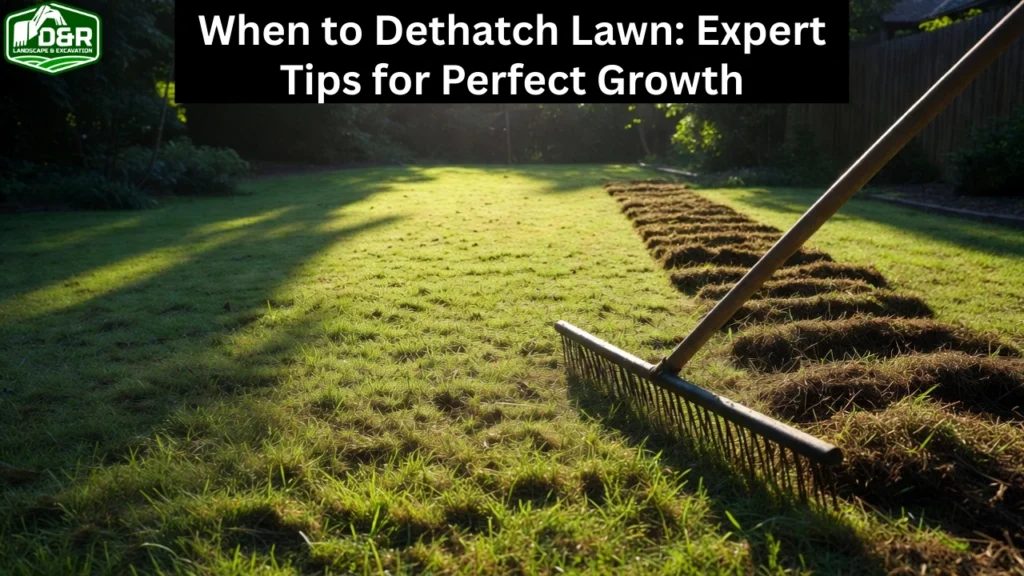
Knowing when is the best time to dethatch your lawn so that you do not waste time on unnecessary stress as well as your lawn heals faster.
How Often to Dethatch Lawn
The question that many homeowners would have is: how often to dethatch lawn? The response differs depending on the grass type, growth rate and environment. There are lawns that grow so fast because of over-fertilization, soils with clays, or high traffic. There are others which pile up slowly.
Lawns experiencing rapid thatch growth might need to be dethatched annually. Most residential lawns require that the dethatching be done after every two-three years. Thatchy lawns may only require it once in every three to four years. Excessive de-thatching may kill roots and weaken lawns, and this is always done by measuring the thatch depth prior to using this maintenance practice.
Step-by-Step: How and When to Dethatch Lawn
Proper knowledge on how and when to dethatch lawn will make sure that the process does not harm your yard, but makes it stronger.
Step 1: Check Thatch Depth
Start by cutting a small patch of grass, and measure the thatch. Only if it is more than half an inch dehatched. This helps in avoiding unwarranted strain to the lawn.
Step 2: Select the Right Tool
A manual dethatching rake will do well in small lawns. The use of a power dethatcher or verticutter is useful in large areas. These machinery eliminate the thatch with better efficiency and less physical labour. In order to avoid injury, wear gloves and protective footwear at all times.
Step 3: Dethatching Process
Begin by running the dethatcher in one direction around the lawn. In case of heavy thatch, repeat the first pass perpendicular to the second pass. Clean up debris with rake or blower.
Step 4: Post-Dethatching Care
Once the dethatching is complete, mow the lawn gently and remove all the left-over clippings. Lightly sprinkling water will remove stress and encourage root recovery. Dethatching followed by fertilizer stimulates a robust new growth. Think about overseeding thin spots or aerating compacted soil to enhance the health of the lawn.
Best Conditions for Dethatching
Dethatch in moderately moist soil. Do not use a soil too wet in that it may be compacted by tools, or too dry in that it may strain grass. A bit of sunshine and light weather is perfect, and the lawn will be revived in no time without sunscald or drought.
Consider local weather conditions when scheduling dethatching. To illustrate, during seasons that receive intense rainfall in spring, it is always advisable to wait until the soil has drained so as to avoid destruction.
Common Dethatching Mistakes
Homeowners commit errors that damage lawns. Dethatching in the dormancy or extreme stress season, with incorrect tools, or insufficient following care may result in bare spots, disease, or root weakness. Excessive thatch removal or over-dethatching is also detrimental; since roots are now exposed, they become more susceptible. These problems can be prevented by observing the right timing, method, and care.
Conclusion
It is important to learn when to dethatch lawn to have a healthy, green lawn. It is possible to prevent problems with the lawn and also to provide active growth by recognizing the symptoms of excessive thatch and knowing the cycle of grass development and also correct dethatching methods. Dethatching should be used in conjunction with normal maintenance activities such as mowing, watering and fertilization to achieve optimal results. These tips of the expert guarantee a beautiful green lawn during the growing season.
FAQs About When To Dethatch Lawn?
Is dethatching necessary every year?
Not necessarily. If your lawn has a lot of thatch, you may need to dethatch it every year, but others may go two to four years between dethatching.
Can I dethatch my lawn in winter?
No. Dethatching should only be done when your grass is actively growing. This will help your lawn recover quickly.
What if I dethatch at the wrong time?
Your grass may have trouble recovering from dethatching, which can lead to bare spots and make your lawn susceptible to pests and diseases.
How do I know my lawn needs dethatching?
You can measure the thickness of your thatch. If it is over half an inch, it is time to dethatch your lawn.
Can I combine dethatching with aeration?
Yes. Some people choose to aerate their lawn right after dethatching to help soil penetrate better, promote healthy roots, and increase nutrient uptake.