
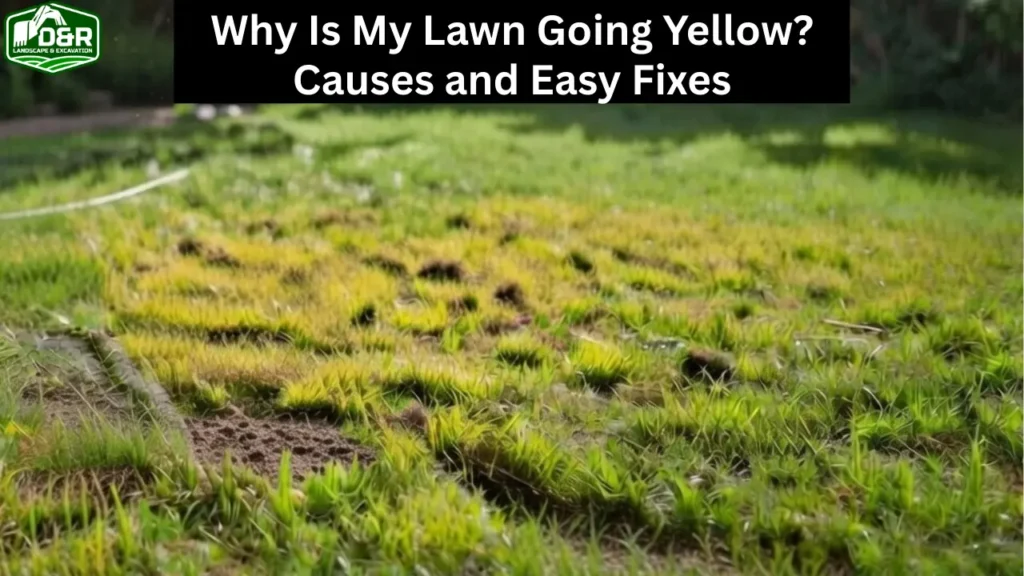
You might be asking why is my lawn going yellow when you are finding that your lawn is losing its chilly green color. Yellow grass is a widespread issue which may occur due to various causes such as watering errors, lack of nutrients, pests or diseases or even seasonal variations. Although having a yellow lawn is something to be concerned about, in the majority of cases it is an indicator that your grass is stressed and that it will heal as soon as the cause of the problem is eliminated.
The most important thing why your lawn is turning yellow and beautiful backyard is to understand how to fix your lawn when it was becoming yellow. The central factors that contribute to yellow lawns, the ability to identify specific issues, the issues of the season, and the steps that can be taken to recover your lawn will be discussed in this guide. If you are looking for Experts help then DNRLandscaping in Florida is the best option especially when you are from Fort Pierce.
Table of Contents
Why Is My Lawn Yellow? Understanding the Main Causes
Grass that is yellow is normally a sign that the lawn is stressed. This discoloration could be due to inadequate watering, nutrient deficiency, pest infestation, soil issues, or lawn diseases. In some cases, the circumstances in the surroundings such as shade or cold weather also contribute. Understanding the precise cause will enable you to make the corrective action.
Improper Watering Can Stress Your Lawn
One of the most common causes of your lawn looking yellow is watering errors. Underwatered grass will begin to wither, becoming pale and brittle and then finally browning. Conversely, excess watering may choke roots and provide an environment that supports funguses. One-third to half an inch of rain or irrigation water per week is sufficient to keep the grass growing. The best thing is to water deeply every few weeks rather than daily which helps in healthy root growth and keeping the green color healthy.
Nutrient Deficiency Leads to Pale Grass
When your lawn turns yellow although it is being well watered, then nutrient deficiency could be to blame. Nitrogen is particularly vital in keeping grass in its bright green color. Lack of sufficient nitrogen leaves your lawn appearing thin, faded and weak. The yellowing may also occur in case of iron deficiency but leave the leaf veins a bit green. A soil test can also be done to identify the nutrients that your lawn is not receiving. Within several weeks, color can be restored by the use of a balanced fertilizer and overall growth can be improved.
Fertilizer Imbalance Can Cause Yellowing
Nutrients are needed but excess or insufficient application of fertilizers may damage your lawn. Excessive fertilizer may burn roots and form yellow or dark areas, which tend to emerge following uneven application. On the other hand, insufficient fertilizer will not stimulate healthy growth, and the grass will remain pale and weak. Yellowing due to imbalance can be avoided by following recommended rates of fertilizers and applying it at the appropriate time of the year.
Lawn Diseases and Fungal Infections
Another common cause of your lawn being yellow can be attributed to fungus diseases. They normally occur in circular or irregular patches of pale grass which enlarge when they are not treated. Fungal growth is promoted by wet and damp climates and thus overwatered or poorly drained lawns are more prone. The affected parts can be analyzed by closely looking and the diseases can be diagnosed and treated before the damage is excessive.
Soil Compaction Weakens Grass
Compacted soil does not allow the penetration of air, water, and nutrients to the roots, thus making grass weak and yellow. The compaction usually takes place in heavily trafficked areas, like walkways or playgrounds, or soils with a high concentration of clay. Your lawn should be aerated at least once or twice annually to ease the compaction and this will enable the roots to penetrate deeper and the grass to resume its healthy green look.
Pests Can Cause Localized Yellowing
Another cause that may make a lawn yellow is the bugs eating the grass roots. The roots are destroyed by grubs, chinch bugs and other pests that do not allow the grass to absorb water and nutrients normally. When patches of grass are raised easily off the ground or when you see patches of yellow which are irregular, then the cause could be due to the activity of pests. Timely diagnosis and treatment are required before it is too late to cause irreparable damage to the lawn.
Poor Mowing Practices Stress Grass
Mowing errors may also lead to yellowing. Mowing off grass leaves too short eliminates excessive amounts of leaf surface, and this makes the plant more weak, leading to stress. Also, the mower blades are dull and therefore cut the grass not neatly thus causing the grass to have yellow ends and even color. Keeping the right mowing height and keeping your blades sharp will mean that you are not putting the grass under much stress which will help in maintaining a thriving green lawn.
Shade Affects Grass Health
To photosynthesize and develop chlorophyll, which makes it green, grass requires sunlight. Slowly growing and appearing thin and yellow are areas of the lawn that are heavily shaded. In case of shortage of sunlight, it is better to prune down nearby trees or plant grass species that are resistant to shades to preserve a healthier look.
Why Is My Lawn Going Yellow in Patches?
In other cases, why is my lawn going yellow in patches but in isolated spots. Knowing the cause of my fading lawn can assist you to pinpoint the issue better.
One of the common causes is uneven watering. When the sprinklers are not spread evenly all over the lawn, part may go dry and turn yellow whilst the rest is green. Circular yellow spots may also be as a result of urine of pets which contain concentrated nitrogen which burns the grass. Also, pests or fungi usually have their way only on specific areas of the lawn causing patchy discolouration. Even the high-foot traffic areas can become yellow as the soil becomes compacted and roots cannot develop.
Why Is My Lawn Going Yellow in Winter?
Many homeowners worry about yellowing in winter. But often, it is a regular seasonal phenomenon.
During a cold weather, grass usually turns dormant, and it slows down and loses a part of green color. Temporary damage to the blades by frost and cold stress may also result in them appearing yellow. Less sunlight on short winter days makes photosynthesis even slower resulting in lighter shades. This discolouration is usually short term and the grass is expected to recover as temperatures increase in spring.
How to Fix a Yellow Lawn
To have a healthy green lawn you need to find out the root cause and remedy the situation. The first thing is to adjust your watering schedule. Water heavily in the morning to ensure that roots receive water and do not water in the evening which encourages fungus.
Another important step is fertilization. A slow-release, balanced fertilizer is necessary to supply essential nutrients throughout time, as well as restore the grass its color. When compacted soil is aerated, the soil will be able to absorb more air and nutrients, leading to an increase in the development of roots. It is important to treat the pests or fungus early to avoid spreading of the yellowing. Lastly, enhancement of lawn care, such as proper mowing, will make your grass grow strong and healthy.
How to Prevent Your Lawn From Turning Yellow
The optimal approach to a green lawn is the preventive care. Keeping the soil and grass in good condition is achieved by regular watering, seasonal fertilization and aerating. Pests should be checked, correct mowing height should be maintained and should not be over watered. The healthy soil has stronger roots that can withstand stresses, discoloration, and diseases. Servicing your lawn periodically enables you to spot and correct any issues early before they escalate.
Signs Your Yellow Lawn Is Recovering
Once the underlying problems are resolved, a lawn usually exhibits some visible recovery in a few weeks. Check for new green shoots, increased growth and more uniform color. Regular watering, fertilizing, and mowing are some of the areas of concern that maintain the lawn and ensure it gets better and better just like it was before.
When to Call a Lawn Care Professional
There are yellowing problems that may be hard to discover or cure. When it seems that despite all efforts to care about your lawn, the large parts of it stay yellow or the situation worsens and expands, it might be time to invite a professional. Professionals are able to test the soil, identify pests or diseases and give specific solutions to heal your lawn effectively.
FAQs About Why Is My Lawn Going Yellow?
Why is my lawn turning yellow even after watering?
The common causes of yellowing with adequate watering are the lack of nutrients, soil issues, pests, or disease, and rarely a water shortage.
Can yellow grass turn green again?
Yes. Lawns can recover once the root cause is fixed. A green appearance can be restored with proper watering, fertilizing and maintenance.
Why is my lawn going yellow in patches but not everywhere?
Patchy yellow grass can be a sign of localized problems like uneven watering, urine of pets, pests, or soil compaction.
Why is my lawn yellow after mowing?
Excessive mowing or dull blades are capable of stressing and leading to yellowing of grass. This is avoided by keeping the blades at the right height and sharp.
Why is my lawn going yellow in winter?
Normalness Winter yellowing is usually normal under the influence of dormancy, frost stress, and lowering sunlight. In spring the lawns usually turn color.