
One of the most frequent questions, which are asked by homeowners searching the natural weed solutions, is: will vinegar kill lawn? The use of vinegar as a less harmful substitute of chemical herbicides is promoted extensively, though the truth is more complicated. Vinegar may be useful on some weeds, but it may also destroy or even kill your lawn grass when applied improperly.
This detailed guide gives the answer to the question of how vinegar actually works, whether it is damaging to turf, and whether it is appropriate in the control of weeds or fungi of the lawn. That’s why people use professionals help in this matter, and at DNR Landscaping they provide every possible care to you lawn.
Table of Contents
What Is Vinegar and How Does It Affect Plants?
Vinegar consists of acetic acid that is the active ingredient which causes vinegar to kill weeds. Approximately 5 percent of acetic acid is found in standard household vinegar, whereas horticultural or industrial grade vinegar can have 20 percent or higher.
Working on plants, acetic acid:
- Destruction of plant cell membranes.
- Drying up leaf tissue.
- Rapidly drying and browning.
Vinegar is non-selective contact herbicide as opposed to selective herbicides, which may be used to eliminate certain plants. This implies that it spoils nearly all plants it comes into contact with, including grass.
Will Vinegar Kill Lawn Grass?
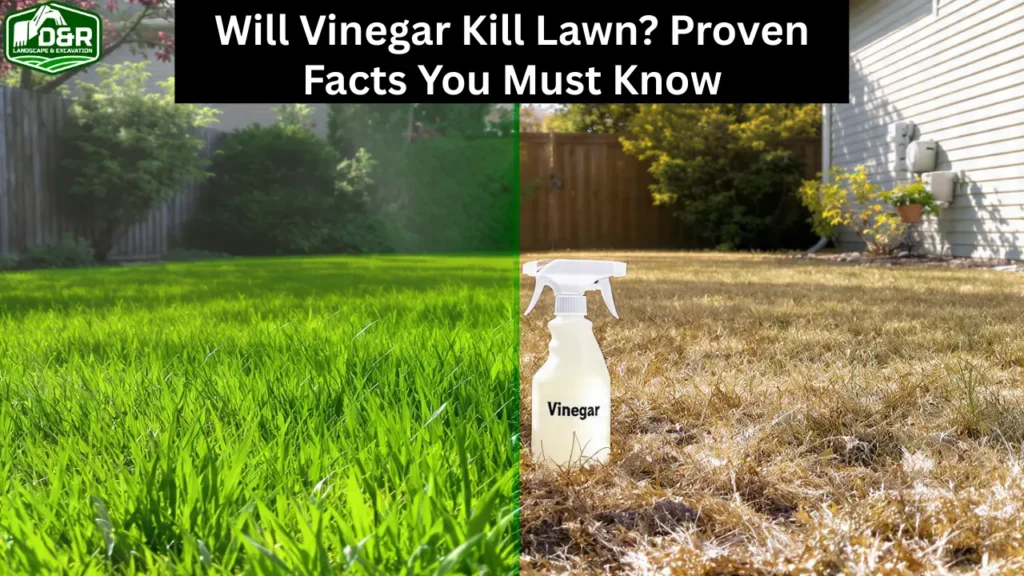
Yes, vinegar does work to kill lawn grass, particularly when it is applied right away or over time.
Vinegar will evaporate the leaf tissue away when it is in contact with turfgrass blades, where the acetic acid has a quicker drying effect. During hours, you might observe the browning, wilting, and visible burn marks. In mild cases, the grass can still recover, provided that the surface tissue was involved only. Nevertheless, higher concentration or repeated doses may result in irreversible trade-off.
Surface Damage vs Root Damage
At 5% concentration, on an average household vinegar will only affect the visible part of the plant. The roots may still be there and grass may grow later on. But at greater concentrations like 20 percent horticultural vinegar it can go deeper into the soil and destroy root systems particularly with young grass or stressed grass.
When used repeatedly, there is a chance of injury of the root. This will eventually thin out your lawn, lower the density of the turf, and leave dead areas that need reseeding.
By the way, will vinegar kill lawn grass permanently? it all depends on the concentration that you use and the frequency of application.
Will Vinegar Kill My Lawn if I Spray It?
It is a case of many homeowners spraying vinegar in areas where they do not intend to. Accidental exposure to vinegar may result in the demise of my lawn; the answer to will vinegar kill my lawn after accidental use? is yes but it depends on the level of exposure.
When vinegar is sprayed on grass and aided by water, the damage can be short lived. Minor discoloration may be observed and it may also be improved in a period of one to two weeks. Nevertheless, excessive use or wind drift, or even concentrated vinegar, may lead to obvious dead areas.
What Happens After Accidental Application?
Grass blades start to lose moisture immediately after being exposed to it. The onset of browning is usually in 24 hours. When substantial amounts of the acid are used or the usage is repeated, the root systems can be weakened leading to the long term decline of the turf.
In the case of the unintentional spraying, water used liberally as quickly as possible might be of help in diluting the acetic acid, and minimizing the harm done.
Why Vinegar Is Non-Selective and Risky for Lawns
The key problem of vinegar is that it is not selective. Contemporary lawn herbicides are developed in such a way that they only attack the broadleaf weeds and leave the grass intact. Plant species, in contrast, are not differentiated by vinegar.
This would imply that applied over a lawn:
- It destroys both the weeds and the desirable turfgrass.
- It may cause uneven results
- It may cause poor health of the lawn in general.
Although vinegar is commonly sold as a natural remedy, natural does not necessarily imply being safe to the turf ecosystem. When used excessively, it may put a strain on grass and change the balance of the soil temporarily, as well as predisposing it to additional weeding.
Will Vinegar Kill Lawn Fungus?
The other question that is usually asked is: will vinegar kill lawn fungus?
Vinegar can prevent some of the surface fungi or mushrooms temporarily by drying out the visible growth. Nonetheless, the majority of the lawn fungal problems start beneath the soil in complicated underground systems known as mycelium.
Surface Suppression vs Long-Term Control
In mushrooms or fungal spots, vinegar can lead to visible dieback once applied on them. This however does not get rid of the cause of fungal disease. The fungi structure that is underground in nature may not be destroyed and it can grow again under good conditions.
Moreover, use of high concentration vinegar on the fungal regions can cause more damage to the adjacent grasses than resolving the fungi issue.
In the case of endemic lawn fungus, the major cause is often still the appropriate cultural practices, which include the enhancement of drainage system, decreased overwatering, aeration of compacted soils, and application of the right fungicides.
This is to say that although vinegar might seem to work at the surface level in killing the fungus of the lawn, it is not a long term cure.
The Real-World Pros and Limitations of Vinegar on Lawns
Small and young weeds can be removed fast with vinegar particularly in non lawns like cracks in the driveway or along the garden edges. It is cheap, readily available and simple to implement.
It has its limitations though that are very strong when applied on turf grass. Since it is only a contact herbicide, it does not tend to kill deep/perennial weeds entirely. Weeds can come out of live roots. Meanwhile, desirable grass can sustain apparent and even irreversible damage.
The risk-to-reward ratio is usually poor in attempting to have a healthy and uniform lawn.
When Should Vinegar Be Used in Yard Care?
Generally vinegar is safe with:
- Hardscape Cafe: Sidewalks and patios.
- Single weeds distant the lawn grass.
- Regions that are being cleared on purpose to be refurbished.
When applied around turf, then it must be sprayed in a precise manner using a sponge or brush instead of being sprayed widely. One should also avoid the windy weather and must always take care of the surrounding plants.
General lawn spraying with vinegar is not advisable in case you want to have healthy grass.
Better Alternatives for Lawn Weed and Fungus Control
To the homeowners that are interested in long-term health of their lawn, it is more effective to use selective and targeted strategies.
Controlling Weeds Safely
Specific herbicides that only check weeds and leave turfgrass are called selective. Values such as proper fertilization and overseeding also increase the density of lawn, which prevents the weeds from forming in the first place.
Managing Lawn Fungus Effectively
Another common cause of lawn fungus is the presence of excess moisture, lack of air movement or compact soil. The root causes are solved by aeration, better drainage, modified watering schedule, and correct fungicide application to reduce the noticeable symptoms and not to eliminate them.
Successful healthy turf management is more common than short-term superficial solutions.
Final Answer: Will Vinegar Kill Lawn?
The answer to the question will vinegar kill lawn is Yes, vinegar may kill lawn grass, particularly when it is sprayed directly on the grass, or sprayed in high levels. When it comes to the question of whether vinegar kills lawn grass, the answer is yes especially when there is frequent or concentrated use. When you are worried about whether vinegar will kill your lawn, it will definitely kill your lawn, particularly when it is sprayed in a vast area or far without proper control.
Vinegar can only give short term superficial inhibition on the fungi in the case of lawn fungus and will not kill the fungi network existing in the ground. Vinegar may look like a handy and natural remedy to the problem, but it is also very harmful to existing lawns. In the long-term and long-lasting health of a lawn, the treatments chosen tend to be scientifically supported and therefore safer and more effective.
FAQs About Will Vinegar Kill Lawn?
Does vinegar kill grass permanently?
When applied in large quantities or applied repeatedly, vinegar may destroy grass permanently. In many cases, household vinegar (5 per cent acetic acid) will kill the part of the vine on the surface, but the roots will regenerate. Nevertheless, horticultural vinegar of greater strength ( 20 percent or more ) could penetrate deeper and potentially cause irreversible damage to roots.
How long does it take for vinegar to kill lawn grass?
Grass normally turns brown in several hours of application. Evident harm normally comes into view in 24 hours. The amount of concentration applied and the extent of death of the grass depends on whether it will die entirely or not.
Will grass grow back after vinegar damage?
In most instances, a grass can be regenerated in case the roots are healthy and the blades are to be affected only. Nevertheless extreme or repeated exposure can demand re seeding or repairing of the grass.
Is vinegar safer than chemical herbicides for lawns?
Vinegar is said to be natural, however, it is not discriminating and can destroy desirable grass as much as it can destroy weeds. The use of selective herbicides is specially created to attack the weeds and avoid the turfgrass thus they are less dangerous when used properly in established turf grass.
Can vinegar kill weeds without harming grass?
Vinegar will destroy any plant it will come in contact with. It is essential to apply it using a brush or a specific applicator so that it does not harm grass. Extensive spraying will probably damage the adjoining lawns.